
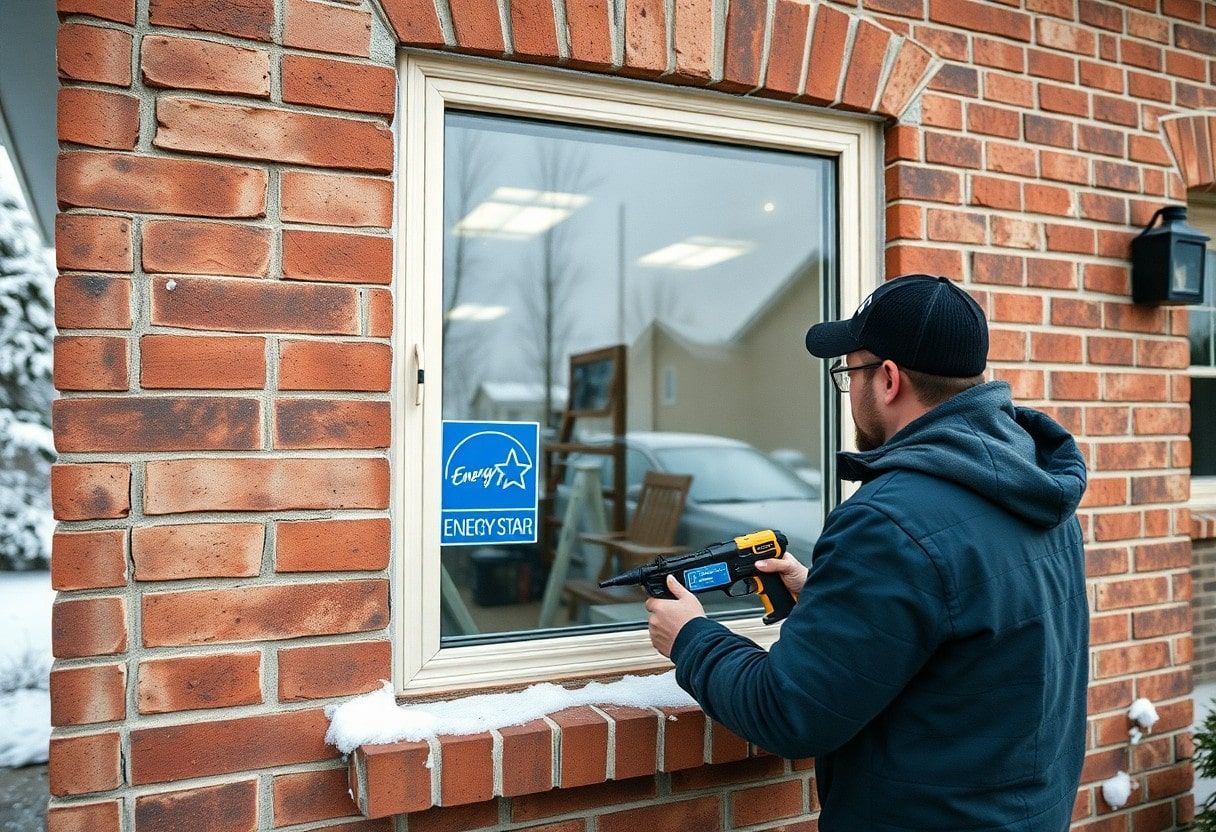
Just upgrading to ENERGY STAR-rated windows can reduce your heating and cooling bills by limiting drafts and heat transfer; low-E coatings, insulated frames and double- or triple-pane glass improve thermal performance and control solar gain in Omaha’s climate. When you choose the right U-factor and SHGC for your home and ensure professional installation, you maximize comfort, lower energy use and extend the lifespan of your HVAC system.
Key Takeaways:
- New high-performance windows (double/triple glazing, low‑E coatings, argon/krypton fills) reduce heat loss in Omaha winters and limit heat gain in summer, lowering HVAC energy use.
- Professional installation with proper flashing and air sealing eliminates drafts and thermal bridging, improving overall efficiency and reducing condensation issues.
- Select ENERGY STAR-rated windows with appropriate U‑factor and SHGC for Omaha to increase comfort, cut utility bills, and often qualify for local rebates or faster ROI.
Understanding Energy Efficiency
What is Energy Efficiency?
When you assess window performance you’re really measuring how much conditioned air the opening lets escape and how much unwanted heat it admits; the two principal specs to watch are U-factor (lower is better for insulating) and SHGC (solar heat gain coefficient, lower limits solar gain). Single-pane windows typically have U-factors near 1.0, while modern double-pane, low‑e, gas‑filled units commonly fall in the 0.25-0.35 range, which translates into markedly less heat transfer through the glass and frame. Across an entire house, windows can account for roughly 25-30% of heat loss, so upgrading glazing and frames directly reduces HVAC runtime.
By comparing performance numbers instead of marketing claims you can choose the right balance for Omaha’s climate: prioritize a low U-factor to cut winter heat loss, but keep SHGC moderate so you still benefit from passive solar gains on sunny winter days. Look for features such as low‑e coatings, argon or krypton fills, warm‑edge spacers and multi‑chamber frames; for example, low‑e double panes with argon frequently lower heat transfer by 40-60% versus older single panes, which is why ENERGY STAR or equivalent performance targets are a good baseline when shopping.
Importance of Energy Efficiency in Omaha Homes
Because Omaha has long, cold winters and hot summers, heating and cooling typically represent the largest portion of your utility bill-often about half of household energy use-so reducing window losses has outsized impact. In practical terms, replacing drafty single‑pane windows in a mid‑century bungalow with high‑performance double‑pane, low‑e units can noticeably reduce HVAC cycling; many homeowners see 7-15% drops in total energy use after a whole‑house window upgrade, with larger percentages in homes that previously had very poor glazing.
In addition to lower energy consumption, you’ll get more consistent indoor temperatures and less condensation on cold mornings, which protects finishes and reduces mold risk around sills; these non‑energy benefits often factor into the payback timeline. Local programs such as Omaha Public Power District incentives and seasonal contractor rebates can shorten payback by offsetting part of the upfront cost, so factor available rebates into your project calculations.
For older houses you own, pay particular attention to installation quality: even the best 0.27 U‑factor window won’t perform if gaps, improper flashing, or poor sealing are present. You should budget for proper air sealing, flashing, and insulation at the rough opening-doing so typically improves overall window system performance by eliminating drafts and thermal bridging, and it often delivers faster, more predictable returns on your replacement investment.
Types of Energy-Efficient Windows
| Double glazing | Two glass panes with a sealed air/argon gap; typical NFRC U‑factor with argon and low‑E is ~0.27-0.35, offering strong cost‑to‑performance for most Omaha homes. |
| Triple glazing | Three panes with two gas gaps; U‑factors commonly range ~0.15-0.22 when combined with low‑E and krypton, cutting winter heat loss by roughly 20-40% versus double in very cold exposures. |
| Low‑E coatings | Thin metallic coatings that lower emissivity (often 0.02-0.10), reducing long‑wave infrared heat transfer; paired with the right glass and gas fill, low‑E can reduce annual heating demand by double‑digit percentages. |
| Gas fills (argon/krypton) | Argon is inexpensive and lowers conduction about 10-20% versus air; krypton performs better in narrow gaps (roughly 20-30% improvement over air) but at higher cost-choose based on spacer width and budget. |
| Frames & spacers | Vinyl, fiberglass, and wood frames with thermal breaks and warm‑edge spacers reduce edge heat loss; warm‑edge spacers can cut edge conduction by up to half compared with aluminum spacers. |
- Weigh upfront cost vs. operating savings-triple glazing often costs 20-50% more than equivalent double glazing but can shorten payback in very cold sites.
- Check NFRC labels: compare U‑factor, SHGC, and Visible Transmittance to match performance to your orientation.
- Installation and air sealing frequently matter as much as glass choice; poor installation can erase expected efficiency gains.
Double and Triple Glazing
Double glazing with an argon fill and soft‑coat low‑E typically delivers U‑factors around 0.27-0.35, which is a balanced upgrade if you want measurable winter savings without major structural changes. You’ll notice that replacing single‑pane units with quality double‑pane products often reduces drafty feeling and condensation, and in many Omaha retrofit projects owners report comfort improvements within weeks of installation.
Triple glazing drops U‑factors to roughly 0.15-0.22 when combined with krypton and high‑performance low‑E, making it the stronger choice for rooms with large north exposures or for homeowners targeting Passive House‑level performance. Keep in mind the extra weight and thicker profiles can require reinforced frames and may reduce solar heat gain in winter unless you choose coatings and frame design that optimize SHGC for your glazing orientation.
Low-E Coatings
Low‑E coatings cut long‑wave IR transfer by reflecting heat back into the home during winter and reducing solar heat gain in summer when you select solar‑control variants; emissivity values as low as 0.02 are common on high‑performance soft‑coat products. If you install a soft‑coat low‑E on the cavity glass with argon fill, you can typically lower the window U‑factor by 0.05-0.10 compared with clear glass, translating directly into lower furnace run‑time on cold Omaha days.
More detailed field studies show that combining low‑E with argon or krypton and choosing the correct SHGC for each orientation can reduce annual heating energy by roughly 10-25%, depending on window area and building envelope. For example, a mid‑century Omaha bungalow that replaced single‑pane windows with low‑E double glazing and argon saw interior surface temperatures rise several degrees and reduced seasonal heating consumption by a noticeable margin.
Recognizing your home’s orientation, window area, and insulation levels will guide the optimal mix of glazing type, coating, and gas fill for the best comfort and payback.
Benefits of New Windows
Reduced Energy Bills
You’ll see direct reductions in your heating and cooling expenses because modern windows cut conductive heat loss dramatically: replacing single‑pane glass (U‑factor ≈ 1.0) with double‑pane low‑E glass and argon fill (U‑factor ≈ 0.28-0.35) can reduce conductive heat transfer by roughly 60-70%. ENERGY STAR estimates that replacing single‑pane windows with qualified replacements can lower overall household energy bills by about 7-15%, and in homes with large window areas or poor insulation the savings can be even higher.
If your Omaha home currently spends $2,000-$3,000 annually on heating and cooling, that range translates to roughly $140-$450 saved per year. Payback periods typically fall in the 5-15 year window depending on your fuel prices, insulation and how many windows you replace; for example, replacing all windows in a 1,800 sq ft bungalow with mid‑range low‑E double panes often yields a 7-10 year simple payback when you factor in local heating costs and rebates.
Increased Comfort
You’ll notice fewer cold spots and drafts because modern windows not only lower conductive heat loss but also improve air sealing and interior surface temperatures-interior glass can be substantially warmer in winter when U‑factors drop from ~1.0 to ~0.30. That warmer glass reduces radiant heat loss from your body, making rooms feel more comfortable at the same thermostat setting and allowing you to lower setpoints by a degree or two without sacrificing comfort.
Beyond temperature, new windows also reduce noise, control UV fading and cut condensation. Upgrading to laminated or insulated glazing commonly reduces street and traffic noise by several decibels, low‑E coatings block a large portion of UV radiation that fades fabrics and flooring, and improved thermal performance lowers the frequency of interior condensation-benefits that together make your living spaces quieter, healthier and more consistent year‑round.
Installation Considerations
Professional Installation vs. DIY
If you want a guaranteed air- and water-tight install, hiring a certified installer is usually the safest route: professional labor in Omaha typically adds $150-$400 per window, and a full-frame replacement job for 8-12 windows commonly runs $5,000-$10,000 depending on materials and complexity. Installers follow best practices such as proper flashing, continuous weather barriers, and low-expansion foam sealing; those details preserve the window’s rated U-factor and can prevent infiltration that, in older homes, can account for roughly 20-30% of heating load.
Doing it yourself can cut labor costs-DIY homeowners often save 20-40% on installation-but you should limit DIY to insert/retrofit projects or sash replacements if you have carpentry experience and the right tools. Improper sealing, out-of-square frames, or missed flashing steps can void manufacturer warranties and lead to condensation, air leaks, or reduced energy savings, so you should weigh the savings against potential rework costs and the loss of installation-backed warranties.
Choosing the Right Windows for Your Home
Focus first on performance numbers: aim for a U-factor of 0.25-0.30 for double-pane low-E units or around 0.18-0.22 for high-performance triple-pane in Omaha’s hot summers and cold winters, and select a Solar Heat Gain Coefficient (SHGC) of 0.25-0.40 depending on orientation. Vinyl frames typically cost $300-$700 per window and offer good thermal breaks; fiberglass runs $600-$1,200 with better dimensional stability; wood-clad options start near $800 but give superior aesthetics and insulation when properly maintained.
Consider window placement and style as performance drivers: south-facing glazing can tolerate a higher SHGC to harvest winter solar gain, while west-facing openings often benefit from lower SHGC and exterior shading to reduce afternoon heat. For example, installing triple-pane, low-E windows with a U-factor near 0.20 on north-facing bedrooms reduces heat loss and airborne noise, whereas south-facing living-room windows with a moderate SHGC deliver better year-round comfort.
Check the NFRC label and compare U-factor, SHGC, Visible Transmittance, and Air Leakage ratings; demand a written warranty (10-20 years on glass is common) and an installation warranty from your contractor. You should get at least three quotes, request before-and-after blower-door or thermal imaging data when possible, and expect typical payback for replacing single-pane with ENERGY STAR-rated double-pane windows to fall in the 10-20 year range, with annual energy savings often between $100-$300 depending on house size and insulation levels.
Government Incentives and Rebates
Local Programs in Omaha
You can tap into incentives from local utilities and nonprofit programs to lower the upfront cost of new windows. Omaha Public Power District (OPPD) and the Metropolitan Utilities District (MUD) run residential efficiency programs that often include rebates for whole-home upgrades, energy assessments, and high-efficiency measures; typical rebates for small measures range from about $50-$250, while comprehensive home upgrade packages can yield larger incentives or discounts through partnered contractors. Confirm current offerings on OPPD’s and MUD’s pages since availability and qualifying requirements-such as ENERGY STAR certification or specific U-factor thresholds-change seasonally.
Income-eligible homeowners should investigate the Nebraska Weatherization Assistance Program and local community action agencies, which may provide free or heavily subsidized upgrades including window repairs or replacements for qualifying households. In practice, you might see a combined approach where a weatherization grant covers most labor costs while a utility rebate covers part of the material expense, making a high-performance window replacement affordable without a large out-of-pocket payment.
Federal Tax Credits
The federal Energy Efficient Home Improvement Credit (Section 25C) created by recent legislation can offset a portion of your window replacement costs; for qualifying projects this credit is calculated as 30% of the allowed expense, subject to an annual limit (commonly cited as up to $1,200 per tax year for non-solar efficiency improvements). For example, if your eligible window work costs $5,000, the 30% calculation would be $1,500 but the credit applied may be capped at the annual limit, reducing your immediate tax liability by the permitted maximum.
To claim the credit you need manufacturer certification that the windows meet required performance standards and you must retain invoices and product documentation; file the credit on IRS Form 5695 and include the supporting paperwork in case of audit. You should also verify eligibility details and phase-in rules for specific model years, since credit rules and qualifying performance thresholds have been updated-consulting a tax professional or the IRS guidance ensures your particular project and timing maximize the available federal benefit.
Case Studies: Omaha Homes
Several recent projects in Omaha show how targeted window choices translate into measurable savings: one 1928 bungalow cut annual heating demand by about 28% after replacing 12 single‑pane windows with double‑glazed, low‑E, argon‑filled units (U‑factor improved from ~1.2 to 0.30), and the owner saw an energy bill reduction of roughly $580 the first year. Another project in a 1970s ranch reduced whole‑house air leakage from 1.2 ACH50 to 0.65 ACH50 after installing triple‑pane windows and sealing rebates, improving comfort enough that thermostat setbacks were increased without complaints.
You can use these numbers to set expectations: payback periods in Omaha commonly range from 7-12 years on full replacements when you include average installation costs ($10,000-$25,000 for whole‑house jobs) and local rebates (typically $100-$300 per window or up to $1,000 total from utility programs). Projects that combined window upgrades with attic insulation or air‑sealing consistently reported the largest percentage drops in winter heating costs because windows were no longer the weakest thermal link.
- Case 1 – 1928 Bungalow (12 windows): single‑pane → double‑glazed low‑E with argon; U‑factor from ~1.20 to 0.30; annual heating energy down 28% (~$580/year); installation cost $9,800; rebate $900; estimated simple payback 9-10 years.
- Case 2 – 1974 Ranch (14 windows + sealing): standard double → triple‑pane retrofit; U‑factor ~0.20; air leakage improved from 1.2 ACH50 to 0.65 ACH50; combined heating and cooling savings ~40% in extreme months; total project $18,500; rebate $1,200; payback ~8 years when paired with air sealing.
- Case 3 – New construction energy‑smart home: spec triple‑pane, low‑SHGC south windows and higher SHGC east/west; modeled heating load reduced by 12% vs. builder‑standard double pane; projected annual HVAC savings $350; incremental window cost $3,200 offset by faster occupancy comfort and a $500 local incentive.
- Case 4 – Historic Midtown Renovation: custom wood‑clad double‑glazed units replacing drafty originals; glazing U‑factor improved from ~1.1 to 0.32; measured draft reduction resulted in 18% lower gas use for heating; preservation tax credit and rebate covered ~30% of upgrade cost ($7,400 total).
- Case 5 – Omaha Rental Portfolio Upgrade (6 units): replaced single‑and‑double pane units with vinyl double‑pane low‑E; average tenant thermostat setbacks increased by 2-3°F without comfort complaints; owner reports average energy bill reduction 12% and reduced turnover; per‑unit upgrade cost ~$1,600, estimated ROI 11-13% annually when considering lower vacancy and utility reimbursements.
Success Stories
You’ll see the biggest wins when window upgrades are part of a package that also addresses air sealing and insulation: one midtown retrofit combined new double‑glazed windows with attic insulation and cut total winter gas consumption by 36%, translating to an annual savings of about $800 on a 1,800 ft² home. Homeowners frequently report fewer cold spots and more consistent indoor temperatures, which lets you set thermostats lower in winter without sacrificing comfort.
If you prioritize south‑facing glazing with appropriately low SHGC and preserved solar gain during winter, your passive heating contribution can meaningfully reduce furnace runtimes; in one case, optimizing SHGC and adding exterior shading reduced summer cooling draws by 15% while preserving winter gains, improving year‑round performance and shortening the payback period on the window investment.
Common Challenges
You may face higher upfront costs for custom sizes or historic‑style frames, which can push a single‑project budget beyond basic replacement options; several Omaha homeowners in older neighborhoods chose wood‑clad units that cost 25-40% more than standard vinyl but retained architectural character and delivered comparable U‑factors. Financing and timing of rebates also complicate budgeting – some incentives require pre‑approval or post‑inspection that you must plan for to collect full rebates.
Installation complexity in older homes frequently reveals hidden issues like rot, warped sills, or out‑of‑square openings that increase labor and material costs; one renovation quoted at $11,000 ballooned to $14,200 after preservations and structural repairs were needed, extending project time and shifting expected payback by 2-3 years. You should factor contingency funds (typically 10-20% of the project) when planning replacements in vintage properties.
To manage these challenges, get a detailed scope and conditional bids that itemize potential repair work, confirm rebate eligibility before signing contracts, and prioritize windows that give the largest thermal return (south and north exposures) if budget is limited.
Final Words
Upon reflecting on how new windows improve energy efficiency in Omaha homes, you can see that high-performance units-properly sealed, insulated, and fitted with low-emissivity coatings and argon or krypton fills-significantly reduce heat transfer, lower your heating and cooling bills, and stabilize indoor temperatures through cold winters and humid summers. By cutting drafts and condensation and reducing strain on your HVAC system, new windows increase your year-round comfort and extend equipment life while shrinking your home’s energy use and emissions.
When you factor in local incentives, reduced maintenance, and increased resale value, upgrading windows becomes a sound long-term investment; select ENERGY STAR-rated products and certified installers to maximize performance and ensure warranty protection. Prioritize an energy audit or professional assessment so you can target the worst-performing windows first and measure real savings after installation.
FAQ
Q: What makes new windows more energy-efficient for Omaha’s climate?
A: New windows combine multiple technologies-insulated multi-pane glass, low-emissivity (Low-E) coatings, inert gas fills (argon/krypton), warm-edge spacers and thermally broken frames-to reduce conductive and radiative heat transfer. In Omaha’s cold winters and warm summers, low U-factors reduce heat loss in winter while appropriate solar heat gain coefficients (SHGC) limit unwanted summer heat. Proper air sealing and correct installation prevent drafts and moisture intrusion, maximizing the window system’s overall performance.
Q: How do U-factor and SHGC affect window performance in Omaha?
A: U-factor measures how well a window insulates (lower is better for heat retention), and SHGC measures how much solar heat passes through (lower reduces solar heat gain). For Omaha, prioritize low U-factor to minimize winter heat loss and choose an SHGC that balances passive solar warming in winter with reduced cooling load in summer. Low-E coatings and selective glazing can help achieve a favorable combination of low U-factor and moderate SHGC.
Q: What specific window features should Omaha homeowners prioritize?
A: Prioritize double- or triple-pane insulating glass with Low-E coatings, argon or krypton gas fills, warm-edge spacers, and insulated or thermally broken frames (vinyl, fiberglass, composite or wood with proper detailing). Good weatherstripping, high-quality seals, and well-designed flashing systems are important. Consider frame material that resists thermal bridging and suits local temperature swings and humidity.
Q: How much can new windows reduce heating and cooling costs in Omaha?
A: Savings depend on current window condition, house insulation, orientation and HVAC efficiency. Replacing single-pane windows typically yields the largest reductions; many homeowners see double-digit percent decreases in annual heating and cooling costs (commonly 10-25%), while upgrading older double-pane units yields smaller but still meaningful savings. Reduced HVAC runtime, improved comfort and lower peak loads also extend equipment life and can lower maintenance costs.
Q: Are there rebates, tax credits or local incentives for energy-efficient windows in Omaha?
A: Incentives vary by year and provider. Federal tax credits or energy-efficiency programs may be available, and local utilities such as Omaha-area electric or gas providers sometimes offer rebates or weatherization programs. Check current offerings from your utility, the Nebraska Energy Office, and national incentive databases to find qualifying window products and application requirements before purchasing.
Q: How important is professional installation for window energy performance?
A: Installation is crucial. Even the best windows perform poorly if not flashed, sealed and insulated correctly. Proper installation prevents air leakage, water intrusion and thermal bridging, and ensures drainage and vapor control are effective. Use certified or experienced installers who follow manufacturer instructions and local building codes to preserve warranties and achieve rated performance.
Q: What maintenance keeps new windows energy-efficient and long-lasting?
A: Regular maintenance includes keeping frames and tracks clean, inspecting and replacing worn weatherstripping, ensuring weep holes and drainage paths are clear, lubricating hardware, and touching up finishes on wood frames. Monitor for persistent interior condensation or visible seal failure in insulated glass units-these indicate performance loss and may require repair or replacement. Routine checks after extreme weather help catch issues early.