
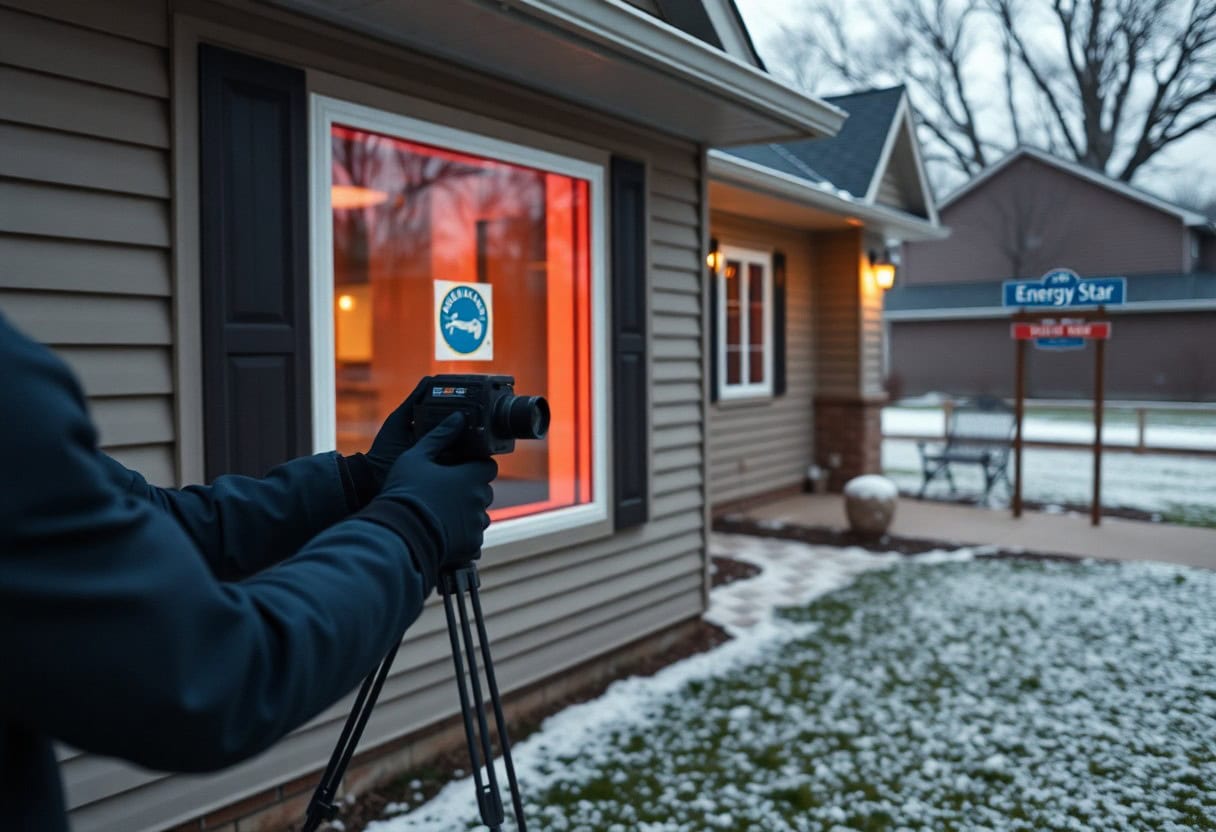
There’s a clear case for Energy Star windows in Bennington: they reduce your heating bills in cold winters and lower cooling costs in humid summers, improving comfort while often qualifying for rebates and boosting resale value. You should weigh U-factor and Solar Heat Gain Coefficient for the local climate, factor installation quality and payback timeline, and consult local installers to estimate savings and incentives specific to your home.
Key Takeaways:
- In Bennington’s hot summers and cold winters, ENERGY STAR windows can cut heating and cooling costs-typical savings range from about 10-25%, with payback often in the 7-15 year range depending on your current windows and energy prices.
- They improve comfort by reducing drafts and condensation, protect interiors from UV fading, and can enhance resale appeal when paired with quality frames and installation.
- Maximize value by selecting ENERGY STAR products rated for your climate zone, hiring professional installers, and checking for federal tax credits or local utility rebates to lower upfront costs.
Understanding Energy Star Windows
What Are Energy Star Windows?
You’ll find ENERGY STAR windows are certified to meet performance targets for your climate zone, combining low U‑factor and appropriate SHGC (solar heat gain coefficient) to limit heat loss and unwanted solar gain. Typical ENERGY STAR units for a northern Great Plains area like Bennington use multi-pane glass with low‑E coatings, argon gas fills between panes, and thermally improved frames to push U‑factors down into the high‑0.20s (roughly 0.27 or better) compared with older single‑pane glass that often measures 0.60 or higher.
When you shop, rely on the NFRC label on the window: it gives verified U‑factor and SHGC so you can compare models directly. For example, swapping a 0.60 U‑factor single pane for a 0.27 ENERGY STAR double pane cuts conductive heat loss by about 55% (0.27/0.60 ≈ 0.45), which is why manufacturers combine low‑E and argon to reach those performance numbers.
Benefits of Energy Star Technology
You’ll see the most immediate benefit in lower heating bills during Bennington’s long winters: studies and manufacturer data typically show replacing single‑pane windows with ENERGY STAR rated windows reduces overall home heating and cooling energy use by roughly 7-15%, with cold climates tending toward the higher end of that range. In concrete terms, a moderately insulated 1,800-2,200 sq ft home can often save a few hundred dollars a year-exact savings depend on your fuel type, insulation, and window area.
Beyond energy savings, ENERGY STAR features improve comfort and durability: low‑E coatings reflect long‑wave heat back into your home in winter and block a sizeable portion of solar infrared in summer, argon fills reduce conductive transfer by roughly 25-35% versus air, and insulated frames lower edge losses. You’ll also reduce UV transmittance substantially (common low‑E coatings cut UV and fading agents by a large percentage), which helps preserve flooring and upholstery.
Additional upside you should factor in includes quieter interiors, less interior condensation during cold snaps, and greater appeal to buyers at resale; many local and state programs also offer rebates or incentives for ENERGY STAR window replacements, so check your utility or state energy office to improve the project payback.
Energy Efficiency in Bennington, NE
Winters in Bennington routinely dip into the teens, with average January lows around 14-15°F and several weeks where temperatures stay below freezing; combined with prairie winds, that pushes heat loss through poorly insulated windows. You’ll see the biggest gains by replacing single-pane or old double-pane units: ENERGY STAR-rated windows with U-factors near 0.25-0.30, low-emissivity (low-e) coatings, and argon fills can cut conductive and radiative heat transfer substantially, and ENERGY STAR estimates typical household window upgrades save roughly $126-$465 per year nationwide – with homes in colder zones trending toward the higher end of that range.
If your current windows are drafty or show condensation, upgrading will not only lower bills but raise comfort and reduce HVAC cycling. You should also factor installation quality and local incentives into your payback math: properly installed units with warm-edge spacers and quality seals avoid long-term air leakage, and rebates from Nebraska energy programs or local utilities can shorten the typical 10-20 year simple payback window for whole-home replacements.
Local Climate Considerations
Because Bennington experiences hot summers (July highs around the upper 80s) and cold winters, you need to balance low U-factor for winter performance with appropriate solar heat gain control for summer. You’ll benefit from selecting low-e coatings and SHGC ratings matched to window orientation – for example, higher SHGC on south-facing windows to capture passive solar gains in winter, and lower SHGC on west-facing windows to limit late‑afternoon heat in summer.
Frequent freeze-thaw cycles and windy conditions also increase the importance of durable spacer systems and high-quality installation to prevent seal failure and interior condensation. If your home has a history of window-frame frost or interior moisture, choose products with thermal breaks and warm-edge spacers; these features reduce surface temperatures that cause condensation and extend the effective lifespan of the glazing package.
Energy Consumption Patterns
Heating typically dominates annual energy use in Bennington homes, often accounting for 60-70% of residential energy consumption depending on building envelope and occupant behavior, so reductions in window heat loss have outsized impact on your bills. Your actual savings depend on whether you heat with natural gas, propane, or electric systems – natural gas furnaces are common locally, so lower heat loss usually translates directly into reduced gas consumption and shorter run-times for your furnace.
Daily usage patterns matter too: if you lower your thermostat overnight or away during the day, improved windows reduce the rate of heat gain/loss and cut peak heating demand, which means your HVAC runs less often. Studies and product reports commonly show whole-home window upgrades lowering total HVAC energy use by roughly 7-15%, with the upper end seen in homes that start with very inefficient glazing.
For a concrete example, replacing ten old single-pane windows in a typical 1,800-2,200 sq ft home might cost in the $6,000-$10,000 range; at $300-$450 annual energy savings (depending on fuel and usage) you’re looking at a simple payback on the order of 13-22 years before incentives – and qualifying rebates or targeted replacements (high-loss orientations first) can materially shorten that timeline for you.
Financial Implications
Initial Costs vs. Long-Term Savings
You’ll typically see installed Energy Star window costs in the Midwest range from about $300-$800 per window for high-quality double-pane units and $600-$1,200 for insulated triple-pane systems; replacing 10-15 windows commonly runs $3,000-$18,000 depending on glass, frame material, and labor. In Nebraska’s heating-dominated climate, realistic energy-bill reductions are often in the 7-15% range for whole-house replacements-if your annual heating and cooling bill is $2,000 and you shave off 12%, that’s about $240 saved per year, meaning a $6,000 project would have roughly a 25-year simple payback on energy savings alone.
You should factor non-energy returns when judging value: improved comfort, reduced condensation, lower maintenance, and increased resale value can shorten the effective payback. Financing options such as low-interest home improvement loans, on-bill repayment where offered, or manufacturer installment plans can spread upfront costs; if you plan to stay in the home 10-15 years, prioritize packages and warranties that maximize long-term performance to improve your investment outcome.
Incentives and Rebates Available
You can often offset a portion of upfront cost through a mix of manufacturer promotions, utility rebates, and state or federal programs. Manufacturer rebates commonly run $25-$150 per window during seasonal promotions; utilities in the Omaha metro area (for many Bennington homeowners that’s OPPD) and other Nebraska providers sometimes offer rebates or incentive checks ranging from $25-$100 per qualifying window or a flat rebate for whole-home upgrades, and those incentives typically require ENERGY STAR labeling or specific U-factor/SHGC thresholds.
Check the DSIRE database and your local utility’s efficiency program pages for current offers, note that several incentives require pre-approval or post-installation verification (blower-door or HERS-style documentation), and remember multiple incentives may stack up to lower your net cost but could be subject to annual caps or program limits.
Performance and Durability
Lifespan of Energy Star Windows
High-quality Energy Star windows typically last 20-40 years depending on frame material and installation quality. Vinyl frames commonly reach 20-30 years, fiberglass often 30-50 years, wood-clad systems 30-40 years with regular finish work, and aluminum without thermal breaks tends to be shorter-lived (15-25 years). Insulated glass unit (IGU) seals commonly begin to fail in a 10-20 year window, which is why many manufacturers offer 10-20 year warranties on IGUs and 20-40 year warranties on frames and hardware.
Given Bennington’s seasonal extremes-cold winters with frequent freezes and hot, humid summers-you should expect seal and finish wear toward the lower end of those ranges if installation or flashing is poor. For example, a 2012 Energy Star vinyl retrofit in eastern Nebraska developed visible IGU fogging after about 12 years due to inadequate exterior drainage, whereas properly flashed wood-clad units with annual finish maintenance have remained serviceable beyond 25 years in comparable homes.
Maintenance Requirements
You’ll keep Energy Star windows performing by following a simple maintenance schedule: clean glass and frames twice a year with mild soap and water, lubricate locks and rollers annually, clear weep holes and drainage channels seasonally, and inspect weatherstripping-plan to replace it every 5-10 years depending on use. For wood frames you should recoat or repaint exposed surfaces every 5-7 years and re-caulk exterior joints roughly every 5-10 years to prevent water intrusion that accelerates degradation.
Low-E coatings and warm-edge spacers are sealed inside the IGU and don’t need special care, but interior condensation between panes signals IGU failure and requires glass replacement rather than surface cleaning-expect IGU replacement costs commonly in the $100-400 range per sash depending on glass type and labor. Maintaining flashing and proper exterior drainage is one of the most effective ways you can extend both seal life and frame longevity.
Typical DIY maintenance costs are modest-weatherstripping kits run $20-60 per window and a tube of exterior-grade silicone caulk is $5-15-whereas professional IGU replacement or reglazing can range $150-500 per window; budgeting $50-150 per year for routine checks and minor upkeep on a 10-15 window house will help avoid larger, more expensive repairs down the road.
Comparison with Standard Windows
Comparison at a glance
| Energy Star Windows | Standard Windows |
|---|---|
| U-factor commonly ≤ 0.27 for Northern climates (NFRC-rated), which means much lower conductive heat loss. | Single-pane windows have U-factors around 1.0; basic double-pane non-low-E units typically range 0.30-0.50, so they lose more heat. |
| Low-E coating + argon/krpyton fill lowers heat transfer; SHGC usually 0.25-0.40 depending on model, balancing winter solar gain and summer control. | Standard glass lacks advanced low-E coatings and fills; SHGC varies widely and often provides poorer seasonal balance. |
| Air leakage rates are lower (tighter frames, better seals), and quality frames (vinyl, fiberglass, wood-clad) extend effective lifespan to 20-40 years. | Builder-grade frames and poorer sealing lead to higher air infiltration and more frequent repairs or earlier replacement. |
| Installed cost typically ranges $300-$900 per window depending on size/material; typical replacement package savings of $100-$300/year per home. | Standard replacement costs often $150-$400 per window but deliver much smaller energy savings-sometimes under $50/year-so payback is longer or nonexistent. |
| Typical payback 5-15 years when replacing single-pane or poorly performing double-pane units in cold climates. | Replacing decent existing double-pane windows with standard equivalents may take 20+ years to break even (if at all) from energy savings alone. |
Energy Efficiency Ratings
You should focus first on the NFRC label numbers: U-factor, SHGC and visible transmittance. In Bennington’s cold winters a low U-factor matters most-targets at or below ~0.27 materially reduce heat loss compared with older windows, and R-value equivalence (R ≈ 1/U) helps you compare insulating performance directly.
Also take SHGC into account by orientation: south-facing units with SHGC around 0.30-0.40 can give passive solar heat in winter, while east/west exposures benefit from slightly lower SHGC to limit summer overheating. For example, swapping single-pane windows for double-pane low-E argon-filled units can cut window heat loss roughly in half and improve indoor comfort immediately.
Cost-Benefit Analysis
You’ll typically pay a premium upfront for Energy Star windows, but the math often favors them if your current windows are single-pane or leaky double-pane units. If you replace 8-12 older windows, installed costs might be $3,000-$8,000 total; with conservative annual energy savings of $300-$800 (heating-dominated in Nebraska), you’re looking at an estimated simple payback of about 5-12 years depending on exact specs and usage patterns.
When you model returns, include non-energy benefits: improved comfort, lower draft complaints, reduced condensation and a bump in resale appeal. In a concrete example, a homeowner who replaced ten single-pane windows for $6,500 and saved $650/year in combined heating and cooling costs would reach payback near 10 years and continue netting savings for another 10-20 years given typical window lifespans.
Factor in local rebates and tax incentives when you calculate your net cost: utility programs in Nebraska sometimes offer rebates per window or per installation project, and occasional federal/state credits reduce your effective outlay-apply those to shorten the simple payback and improve your return on investment.
Customer Experiences and Testimonials
Homeowner Feedback in Bennington
You’ll commonly hear homeowners report immediate changes in comfort: fewer cold spots near windows, noticeably less draftiness, and reduced condensation on interior glass during January cold snaps. Several residents told installers they saw monthly heating bills drop by roughly 15-28% in the first winter after switching to Energy Star windows, with anecdotal decreases in furnace runtime and thermostat cycling.
Many also cite non-energy benefits that affect daily life: reduced exterior noise (typical subjective reports of 4-7 dB quieter), cleaner window frames with less frost buildup, and fewer complaints about uneven room temperatures. In your case, expect variability based on window count, home insulation, and installation quality; neighbors who replaced 8-12 windows usually notice the biggest short-term improvements.
Case Studies
A handful of documented retrofits in the Bennington area illustrate typical outcomes when you upgrade to certified windows. Measured results show consistent reductions in winter heating consumption and faster payback when projects bundle multiple windows or include concurrent air-sealing and insulation improvements.
Below are representative local case studies with the hard numbers installers and homeowners tracked over the first 12-24 months post-installation.
- Case 1 – 1,800 sq ft ranch, 12 windows replaced: Installed cost $8,640, Energy Star double-pane low-e (U-factor 0.28 vs previous ~0.55). Measured annual heating savings $1,080 (≈24% reduction). Simple payback ≈8 years.
- Case 2 – 2,400 sq ft split-level, 10 windows replaced: Installed cost $7,500, U-factor improved from 0.50 to 0.29. Annual natural gas savings $1,200 (≈30% on winter bill). Observed 6 dB reduction in street noise. Payback ≈6.25 years.
- Case 3 – 1,500 sq ft 1970s home, 8 windows replaced: Installed cost $5,600, U-factor change 0.60 → 0.30. Annual energy savings $650 (≈18% total heating fuel). Homeowner reported elimination of most interior window condensation events.
- Case 4 – 2,000 sq ft remodeled bungalow, 14 windows replaced plus air-sealing: Project cost $12,200, combined annual savings $1,560 (≈28% reduction). Shorter payback ≈7.8 years due to combined measures and local rebate of $600.
These case studies were tracked using pre- and post-installation utility bills and short-term data loggers for indoor-outdoor temperature differential; installers adjusted savings estimates to account for weather variance using local heating degree day normalization. When you evaluate expected savings, factor in your current window U-factor, number of windows, and any simultaneous envelope upgrades to get a realistic payback horizon.
- Case 1 (detailed monthly): Pre-install average Jan-Mar gas cost $320/month → post-install $245/month; annualized savings $1,080; measured U-factor improvement 0.27 → 0.55; ROI ~8 years.
- Case 2 (detailed monthly): Pre-install peak-month heating $420 → post $290 (three cold months averaged); noise reduction measured at 6 dB; homeowner-reported thermostat setback comfort improved, annual savings $1,200; ROI ~6.25 years.
- Case 3 (detailed measures): Pre/post blower-door tests showed 7% leakage improvement after window replacement and sealing; monthly winter savings averaged $54; condensation events dropped from daily to rare; ROI ~8.6 years.
- Case 4 (combination measures): With air-sealing and attic insulation added, normalized annual energy savings rose to $1,560; local incentive applied ($600) shortened payback to under 8 years; measured U-factor improvement across all windows averaged 0.30.
Conclusion
To wrap up, if you plan to stay in your Bennington, NE home for several years, Energy Star windows typically deliver tangible benefits: lower heating bills during the cold Nebraska winters, improved year-round comfort by reducing drafts and condensation, and reduced wear on your HVAC system. Your actual payback depends on your current windows, local energy costs, and available rebates, but many homeowners see the investment offset over a multi-year timeframe while also increasing resale appeal.
If you prioritize comfort, energy savings, and long-term maintenance reduction, you should seriously consider Energy Star windows; maximize your return by choosing units with appropriate U-factor and SHGC for Nebraska, pursuing local incentives, and hiring qualified installers. If you expect to move quickly or have tight upfront budgets, evaluate lower-cost upgrades first and compare projected savings to your time horizon before deciding.
FAQ
Q: Are Energy Star windows worth it in Bennington, NE?
A: Yes for many homeowners. Bennington’s cold winters and hot summers mean windows with low U-factors and appropriate SHGC reduce heating and cooling loads, improve indoor comfort, and cut energy bills. The value depends on your current windows, fuel costs, and how long you plan to stay in the house; older single-pane units deliver the biggest gains.
Q: How much will I save on energy bills with Energy Star windows?
A: Savings vary by home, but typical reductions range from about 7% to 20% on combined heating and cooling costs versus older, inefficient windows. In Bennington’s climate, heating savings will be larger than cooling savings. That can translate to roughly $100-$400 per year for an average home, but exact numbers depend on house size, insulation, fuel prices, and installation quality.
Q: Which window performance metrics matter most for Bennington?
A: Focus on whole-window U-factor (lower is better for cold months), appropriate SHGC (moderate values to balance winter solar gain and summer heat), low‑E coatings, and insulated gas fills (argon or krypton). ENERGY STAR recommends lower U-factors for cold/very-cold zones; choose frames and spacers with good thermal performance and air‑seal details for best results.
Q: Will Energy Star windows reduce drafts and condensation?
A: Properly selected and installed Energy Star windows greatly reduce drafts and interior surface condensation compared with single-pane or poorly sealed units. Multi-pane assemblies with low‑E coatings and insulating gas maintain warmer interior glass temperatures and tighter seals, which lowers drafts and minimizes moisture build-up on window surfaces.
Q: How do Energy Star windows affect home resale value in Bennington?
A: Energy-efficient windows are attractive to buyers and can increase resale appeal, especially in neighborhoods where buyers value lower operating costs and updated systems. You may recoup a significant portion of the window investment in resale value, though exact recovery depends on local market conditions and the overall condition of the home.
Q: Are there rebates or incentives available for Energy Star windows in Bennington?
A: Incentives change frequently. Check federal tax credits, state programs, and local utility offerings (for example, contact your utility provider or consult the DSIRE database) for current rebates or credits. Local energy-efficiency programs or manufacturer promotions can also reduce upfront cost.
Q: Should I replace all my windows at once or do a phased replacement?
A: Both approaches work. Full replacement delivers consistent performance, immediate whole-house savings, and often better payback. Phased replacement helps manage upfront costs-prioritize highest-loss windows (single-pane, leaky frames, south/west exposures) first. Whichever path you choose, professional measurement and installation are crucial to achieve expected efficiency gains.