
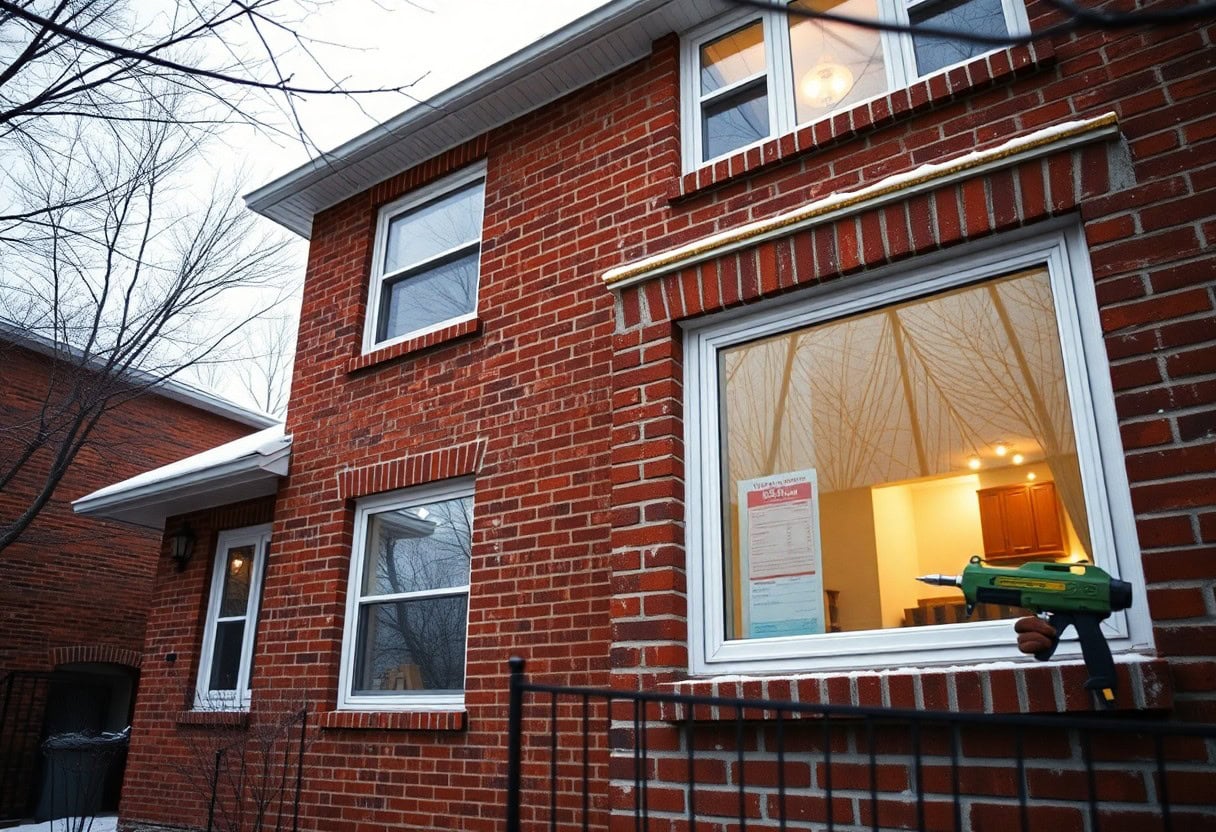
It’s surprising how much energy you can save by upgrading windows in Omaha: new double- or triple-pane units with low-E coatings and argon fill cut heat transfer, stop drafts, and help your HVAC run less, lowering bills and increasing comfort year-round. Proper installation and weatherstripping seal gaps, while window frames with thermal breaks resist conductive losses; together, these improvements reduce load in both hot summers and cold winters, improve indoor comfort, and can qualify you for rebates and incentives.
Key Takeaways:
- Energy-efficient glazing and insulated frames (low-E coatings, argon/krypton fills, lower U-factor) reduce heat transfer, keeping homes warmer in Omaha winters and cooler in summer.
- Proper seals and professional installation minimize drafts and air leakage, improving comfort and lowering heating and cooling bills.
- New windows reduce condensation and UV fading, often pay back over time through energy savings, and may qualify for local rebates or incentives.
Understanding Energy Efficiency
What is Energy Efficiency?
Energy efficiency for windows measures how well they slow heat flow and control solar gain so your home needs less heating and cooling. You judge that performance with metrics such as U‑factor (heat transfer rate), SHGC (solar heat gain coefficient), and air leakage; typical single‑pane windows have U‑factors around 1.0-1.3, modern double‑pane Low‑E windows with argon fill sit near 0.30-0.35, and high‑performance triple‑pane units can reach ~0.20-0.25, meaning roughly a 60-80% reduction in conductive heat transfer versus old single panes.
Components like Low‑E coatings, inert gas fills, warm‑edge spacers and tight installation all matter: Low‑E reduces radiant heat exchange, argon reduces convective transfer between panes, and proper sealing limits infiltration. When you combine those elements you cut both seasonal heat loss in Omaha winters and unwanted solar gain in summer, and you also reduce condensation and uneven room temperatures that come from thermal bridges and drafts.
Benefits of Energy Efficiency in Homes
Upgrading windows directly lowers your utility bills because windows can account for about 25-30% of residential heating and cooling energy loss; swapping single‑pane units for ENERGY STAR‑level double‑pane Low‑E windows commonly reduces whole‑house energy use by roughly 7-15% depending on your home and orientation. For example, if your annual HVAC cost is $2,000, a 10% reduction saves about $200 a year, which compounds over time and shortens payback when combined with local incentives.
Beyond savings, you gain measurable comfort and health benefits: well‑sealed, high‑performance windows cut drafts and cold spots, lower indoor humidity swings and condensation on glass, and improve acoustic comfort-upgrades can reduce exterior noise transmission by roughly 20-50% depending on glazing and installation. You’ll also lower HVAC runtime, which can extend equipment life and reduce maintenance frequency.
Payback periods typically fall in the 7-15 year range based on installation costs, energy prices and available rebates; if you save $300 per year and your upgrade costs $3,600, your simple payback is about 12 years, and any local utility rebate or federal/state incentive shortens that window. You should factor expected lifespan (20+ years for quality vinyl or fiberglass frames and 25+ years for good glazing) and improved resale value when evaluating the investment for your Omaha home.
The Role of Windows in Home Energy Efficiency
How Windows Affect Energy Loss
Heat moves through your windows three main ways: conduction through the glass and frame, convection from air leaks around the sash, and radiation from solar gain. In practical terms, windows commonly account for roughly 20-30% of a home’s heating and cooling losses; a single-pane window typically has a U-factor near 1.0-1.1 Btu/hr·ft²·°F, while modern double-pane low‑E units with argon fill often sit in the 0.25-0.35 range. That lower U-factor directly reduces winter heat flow out of your house, and the solar heat gain coefficient (SHGC) controls how much sun you admit on south- and west-facing exposures.
When you replace poor-performing glass and frames, the energy picture changes measurably: swapping single-pane units for double-pane low‑E with argon can cut heat transfer through the window assembly by 40-50% and, depending on your home’s insulation and orientation, lower overall HVAC energy use by roughly 10-25%. Given Omaha’s cold winters and warm, humid summers, you gain the most by prioritizing low U-factors for north-facing and high-insulation locations while balancing SHGC on sun-exposed elevations to reduce cooling loads in summer.
Common Window Inefficiencies
Older windows usually show inefficiencies in predictable ways: single-pane glass, thin metal frames without thermal breaks, failed sealed units (visible as fogging between panes), and degraded weatherstripping that allows air infiltration. For example, aluminum-frame windows without thermal breaks conduct heat far more readily than vinyl or fiberglass frames, so you’ll see larger temperature differentials at the frame even if the glass is upgraded. Failed seals not only reduce insulating value but also indicate humidity intrusion that accelerates long-term performance loss.
Poor installation magnifies these problems-gaps at the rough opening or improper flashing can erase a large portion of the glass’ efficiency gains. Performance metrics you can look for include U-factor (lower is better), SHGC (matched to window orientation), and visible indicators like condensation on interior surfaces. In practice, a 20-30-year-old window that looks drafty or fogged between panes rarely meets the 0.30 U-factor recommended for cold climates and will cost you substantially more in heating bills than new, properly installed units.
For a practical assessment, you can use simple tests and professional diagnostics: a fogged sealed unit or a steady draft at the sash means the unit is underperforming, an infrared scan or a blower-door-assisted window smoke test quantifies heat loss and leakage, and adding an insulated storm window can reduce window heat loss by 25-50% as a lower-cost retrofit. Typical replacement costs for high-performance double-pane low‑E windows range widely-often $300-$1,200 per window-but in homes with high heating loads the payback on energy savings plus improved comfort frequently falls in the 10-20 year range, with faster returns when incentives or rebates are available.
Types of Energy-Efficient Windows
Several common technologies deliver the biggest energy gains, and you can mix them to match your budget and goals: insulating panes, gas fills, low-E coatings, and better frames each address different heat-transfer paths. Energy Star guidance for colder climates recommends whole-window U-factors around 0.30 or lower; typical product ranges you’ll see are shown below so you can compare performance when shopping.
| Double-pane windows | Two glass panes with a sealed air or gas cavity; common U-factor range ~0.25-0.35 when paired with low-E and argon; moderate cost and quick payback versus single-pane replacements. |
| Triple-pane windows | Three glass panes with two cavities (often krypton or argon); U-factor can reach ~0.15-0.25; higher upfront cost but superior winter performance and noise reduction. |
| Low‑E (low emissivity) glass | Microscopic metallic coatings that reflect infrared heat while passing visible light; lowers U-factor and SHGC-select coatings to favor heating or cooling season performance. |
| Gas fills (argon, krypton) | Inert gases between panes reduce convective heat transfer; argon is common and economical, krypton performs better in narrow cavities and with triple-pane units. |
| Frame and spacer types | Vinyl, fiberglass, wood, composite, and thermally broken aluminum frames vary in conductivity; warm-edge spacers and insulated frames reduce edge heat loss and condensation risk. |
Double and Triple-Pane Windows
You’ll notice double-pane units provide a significant step up from single-pane: with a low-E coating and argon fill, a typical double-pane window achieves U-factors in the mid-0.20s, cutting heat transfer by roughly half compared with single glazing in many cases. If you live in an Omaha home with frequent subfreezing nights, that translates to measurable heating savings and fewer cold spots around windows.
Triple-pane windows push performance further by adding a second cavity and often using krypton gas; U-factors can fall into the high 0.10s to low 0.20s depending on coatings and spacers. You should weigh the extra upfront cost and weight-triple-pane is most cost-effective on very cold exposures, south-facing large glazing in high-performance builds, or if you want superior sound attenuation and condensation control.
Low-E Emissivity (Low-E) Glass
Low-E coatings come in hard-coat and soft-coat forms and are designed to reflect long-wave infrared while transmitting visible light, so you get daylight without as much radiative heat loss in winter or unwanted solar heating in summer. In practice, adding low-E to a double-pane unit commonly lowers the whole-window U-factor by a noticeable margin and reduces cooling loads by cutting solar heat gain coefficient (SHGC) according to the coating type.
Choose the coating based on orientation: selective low-E that admits winter solar gain but limits summer heat is often best on south-facing windows, while lower-SHGC coatings suit west-facing glass. Performance numbers vary, but many low-E treatments will reduce annual window energy transfer by roughly 10-30% compared with non-coated insulating glass, especially when combined with gas fills and warm-edge spacers.
Soft-coat low-E (sputtered) typically outperforms hard-coat in insulating value but must be protected inside an insulated glazing unit; spectrally selective low-E allows visible light while blocking more near-infrared, which is why installers pair specific low-E types with argon or krypton fills and appropriate frame selections to hit target U-factors and SHGCs for Omaha’s mixed heating/cooling season.
- If your budget is limited, prioritize low-E + argon in a quality double-pane unit-U-factor improvements are often the best dollar-for-dollar gain.
- Consider triple-pane with krypton for large north-facing or bedroom windows where winter comfort and sound reduction matter most.
- Insist on warm-edge spacers and factory-controlled IGU assembly to reduce edge heat loss and long-term seal failures.
- Ask installers for NFRC labels showing whole-window U-factor and SHGC so you can compare apples to apples.
Perceiving how each technology stacks up for your specific exposures and budget makes it easier to prioritize upgrades and estimate payback.
Window Insulation Techniques
Gas Fills
You’ll get the biggest bang-for-your-buck by specifying inert gas fills in insulated glass units: argon is the industry standard for double-pane windows because it lowers heat transfer about 10-15% versus air-filled units and is relatively inexpensive. In practice, that means an argon-filled double-pane replacement can shave noticeable heat loss at night and reduce the work your furnace does during Omaha’s sub-freezing stretches; manufacturers commonly pair argon with low-e coatings to push whole-window U-factors down further.
If you’re targeting the coldest parts of your home or choosing triple-glazed units, krypton is worth evaluating despite its higher cost-it performs better in narrow cavity widths and can yield another incremental improvement in insulating performance over argon. Check product specs and warranties: gas retention depends on seal quality, so you should look for IGUs with long-term gas fill warranties (often 10-20 years) and NFRC-rated U-factors to compare real-world performance.
Warm Edge Spacers
You’ll see a clear difference at the glass perimeter when you move from traditional aluminum spacers to warm-edge spacers made from thermoplastic or composite materials: those spacers dramatically reduce thermal bridging at the edge of the unit and raise the edge-of-glass temperature, which lowers the likelihood of surface condensation and cold drafts at the sash. In measurable terms, warm-edge spacers can cut edge-related heat loss noticeably compared with aluminum spacers and contribute to a better whole-window U-factor and higher NFRC condensation resistance (CR) ratings.
When specifying warm-edge, prioritize spacer systems that are certified for compatibility with the IGU seals and frame systems you’re using; you’ll want materials that resist compression set and thermal cycling so seals last longer and gas retention remains stable. Combining warm-edge spacers with argon or krypton fills and high-performance low-e coatings gives you a stacked improvement-each component multiplies the effectiveness of the others, so the best-performing windows in Omaha typically use all three.
For an added layer of decision-making, ask manufacturers for NFRC whole-window U-factor and CR values rather than relying on center-of-glass numbers alone, since the spacer and edge seal determine real in-place performance; installers experienced with cold-climate retrofits will also align spacer choice with frame type (vinyl, fiberglass, or aluminum-clad) to avoid thermal mismatches and premature seal failure.
Choosing the Right Windows for Omaha Homes
Climate Considerations
Omaha sits in IECC Climate Zone 5, so you need windows that handle large seasonal swings: subzero winters and 90°F-plus summers. Target a whole-window U-factor of 0.30 or lower for most exposures; for north-facing windows aim for 0.25 or better, and for south-facing glass consider an SHGC between 0.30 and 0.40 if you want passive solar gain in winter or 0.20-0.30 if you prioritize summer heat control. In practice that means choosing double-pane low‑E with argon fill for good value, and stepping up to triple-pane with krypton and a warm-edge spacer where the glass area is large or where you want the best condensation resistance.
Your frame choice also matters: fiberglass and thermally broken aluminum maintain shape and performance across freeze-thaw cycles better than single‑wall metal, while wood‑clad combines insulation with aesthetics. If your current windows are single‑pane or have U‑factors near 1.0, upgrading to U≈0.30 units can reduce window heat loss by roughly half; depending on total glazed area, that typically translates to a 10-20% reduction in whole‑home heating and cooling energy use in Omaha conditions.
Local Building Codes and Standards
You must follow Omaha and Douglas County building requirements when selecting windows: codes specify minimum performance (U‑factor, solar heat gain limits in some cases), mandatory NFRC labeling, and safety glazing in hazardous locations. Typical egress rules require a minimum net clear opening of 5.7 ft² with minimum dimensions of roughly 24 inches high and 20 inches wide for bedrooms – confirm the exact local interpretation before planning bedroom window changes. Also look for tempered glass where code requires it (near floors, doors, and adjacent to showers or tubs).
Structural and installation standards are also enforced: windows may need design pressure or wind‑load ratings stamped on the unit for certain elevations, and air leakage limits are often defined by the adopted energy code or local amendments. Your permit submittal should include NFRC label values (U‑factor, SHGC, VT, and air leakage), the manufacturer’s installation instructions, and a flashing/WRB integration plan; inspectors will verify compliance during the rough‑opening and final inspections.
To streamline approval and avoid callbacks, provide product sheets with certified NFRC numbers, a site‑specific anchoring schedule, and an installer warranty at permit time, and confirm whether local utilities like OPPD or municipal programs offer rebates that require pre‑approval inspections – improper installation can void rebates and manufacturer warranties, so coordinate code compliance, energy incentives, and installer qualifications before ordering.
Installation Best Practices
Professional vs. DIY Installation
If you hire a professional installer, expect one window to take roughly 1-3 hours and a full-house replacement to be completed in 1-3 days depending on complexity; typical labor in Omaha runs about $100-$300 per standard window and $300-$600 for complex installs such as structural openings or bay windows. Professionals bring specialized tools, use manufacturer-recommended fastening patterns (often screws every 12-16 inches), and can certify the installation so manufacturer warranties (commonly 10-20 years) remain valid.
Taking the DIY route can cut your total project cost by around 20-40% if you have basic carpentry skills, a level, power drill, shims, backer rod, and low-expansion window foam. You should tackle DIY only for like-for-like sash swaps or single-frame retrofits; larger structural changes, flashing integration with the house wrap, and complex head/sill details are where errors commonly lead to drafts, water intrusion, or voided warranties-some Omaha homeowners who attempted full replacements without professional flashing have reported follow-up repair bills of several hundred dollars per window.
Ensuring Proper Sealing and Insulation
Begin by checking that the rough opening is square within 1/8 inch and that a properly sloped sill pan or flashing is in place to drain water to the exterior. Leave a uniform installation gap of about 1/4″-3/8″ around the frame for shims; set the frame on non-compressible shims at quarter points and fasten per the manufacturer’s schedule to avoid frame distortion that would lower thermal performance.
Use a three-step flashing sequence: a continuous sill pan, self-adhesive flashing up each jamb, and a head flashing that overlaps the jamb tape by at least 2 inches and ties into the house WRB. Fill perimeter gaps with low-expansion, window-specific polyurethane foam for gaps up to 1-1.5 inches; for larger voids, insert closed-cell backer rod or mineral wool first, then seal, and finish interior joints with low-modulus silicone or acrylic-latex caulk to allow movement without cracking.
After installation, perform simple quality checks you can do yourself: run a garden-hose water test for 10-15 minutes while an assistant checks the interior for leaks, scan around frames with a thermal camera during a temperature differential to spot cold spots, and inspect for daylight at joints-air leakage targets for ENERGY STAR windows are typically ≤0.3 cfm/ft², so visible gaps indicate corrective work is needed.
Summing up
So when you replace aging windows in your Omaha home, you cut heat loss in winter and reduce solar heat gain in summer by using low‑E coatings, multi‑pane glass with argon or krypton fills, and thermally broken frames – all of which lower your HVAC load, shrink energy bills, and improve year‑round comfort. New windows also reduce drafts and condensation, helping your living spaces feel more consistent without overworking your furnace or air conditioner.
By selecting products with appropriate U‑factor and SHGC ratings for Omaha’s cold winters and hot summers and ensuring professional sealing and installation, you maximize savings and durability; you can also take advantage of ENERGY STAR certifications and local incentives to shorten payback time. Upgrading your windows is a practical, measurable step you can take to make your home more energy efficient, comfortable, and cost‑effective.
FAQ
Q: How do new windows improve energy efficiency in Omaha homes?
A: New windows reduce heat loss through better glazing, insulation and air sealing, lowering heating demand in Omaha’s cold winters and reducing cooling load in summer. Features like low-emissivity (low-E) coatings, gas fills, and insulated frames minimize conductive and radiant heat transfer, reduce drafts and condensation, block damaging UV, and can cut energy bills while improving comfort and indoor temperature consistency.
Q: Which technical window properties matter most for Omaha’s climate?
A: Prioritize low U-factor (less heat transfer) for winter performance, appropriate solar heat gain coefficient (SHGC) to balance winter heat retention and summer solar control, and high visible transmittance (VT) for daylighting. Look for inert gas fills (argon or krypton), low-E coatings designed for mixed climates, robust frame insulation (fiberglass, vinyl, or wood with thermal breaks), and low air leakage ratings on the NFRC label.
Q: What energy savings and payback can homeowners expect?
A: Savings vary by home, window condition and heating fuel, but many homeowners see reductions in heating and cooling costs and improved comfort. Typical utility bill reductions range from modest to substantial (often in the low double-digit percentage range for homes with very old windows). Payback periods commonly run from several years to a decade or more depending on product cost, installation quality and local energy prices; targeted upgrades to the worst-performing windows shorten payback.
Q: How do I read the NFRC label to pick the right window?
A: Check the NFRC label for U-factor, SHGC, VT and air leakage. Lower U-factor is better for heat retention; SHGC should be balanced-higher if you want passive solar gain in winter, lower if you need summer solar control. VT shows daylighting potential. Also review the product’s whole-window ratings, not just the glass, and compare manufacturer performance data for the climate conditions typical of Omaha.
Q: Are double-pane windows with argon enough, or should I get triple-pane?
A: High-performance double-pane windows with low-E coatings and argon fill often provide substantial efficiency at lower cost and are a good value for many Omaha homes. Triple-pane windows deliver superior U-factors and noise reduction and may be worth the extra cost for very cold, drafty homes, large glazed areas, or homeowners who prioritize maximum insulation and comfort.
Q: How important is installation, and what should I verify during the upgrade?
A: Proper installation is important to realize rated performance. Verify continuous flashing, proper drainage, full perimeter insulation or backer rod where specified, airtight sealing at interior and exterior transitions, correct shimming to prevent frame distortion, and factory-rated fall protection where required. Use an installer experienced with window flashing details and local weatherproofing practices; get a written warranty and an air-leak or blower-door test if possible.
Q: Are there incentives, rebates or certifications I should pursue in Omaha?
A: Look for local utility rebate programs, state incentives and federal tax credits that apply to ENERGY STAR or high-efficiency windows-availability changes, so check current program rules. Choose NFRC- and ENERGY STAR-labeled products and request documentation from your roofing contractor in Lincoln, NE to support rebate or tax-credit applications. Local utilities or municipal energy offices can confirm eligible programs and application steps.