
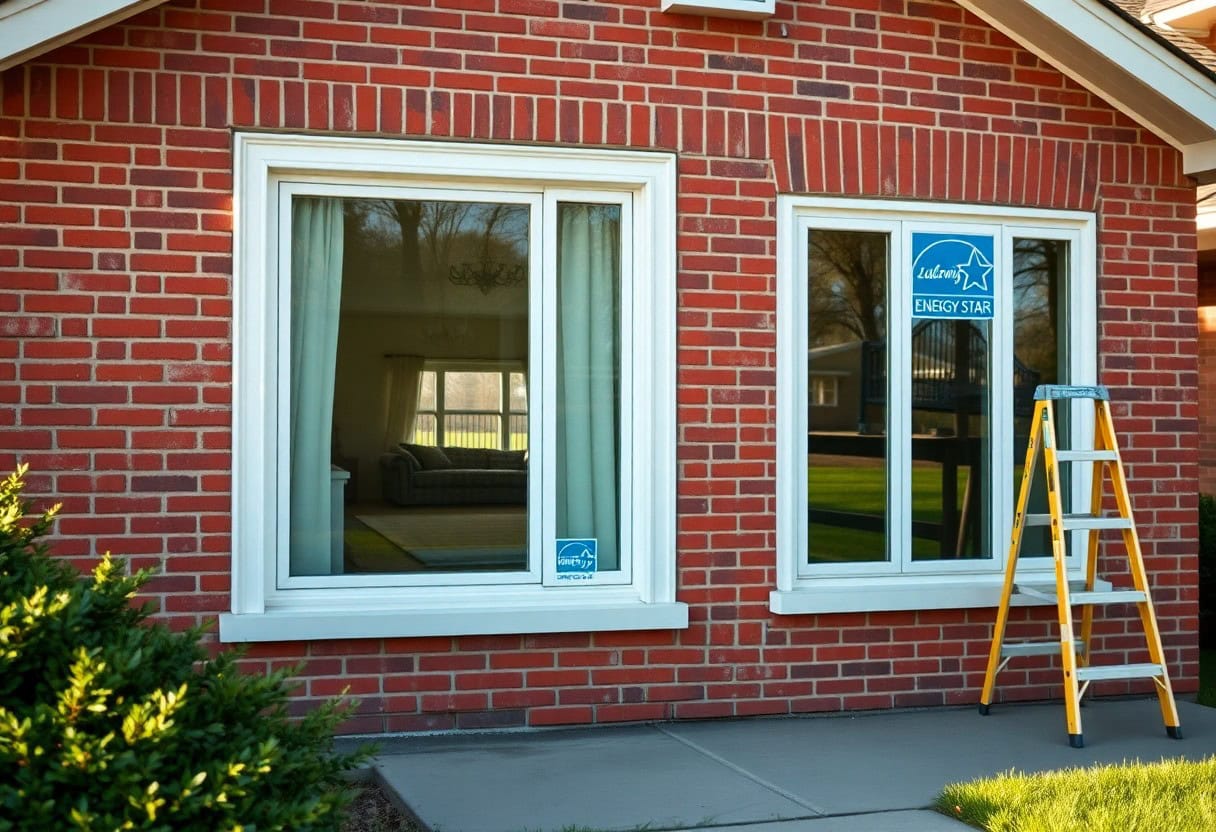
Over time, investing in energy-efficient windows can significantly reduce your heating and cooling costs, improve indoor comfort by minimizing drafts and temperature fluctuations, and protect furnishings from UV damage; these upgrades also lower your home’s environmental footprint, often qualify you for local incentives or rebates in Lincoln, and boost resale appeal, making them a smart, long-term investment for your property.
Key Takeaways:
- Reduce energy bills – high-performance windows cut heat loss in winter and heat gain in summer, lowering HVAC costs in Lincoln’s climate.
- Increase comfort and protection – better insulation minimizes drafts and condensation, stabilizes indoor temperatures, blocks UV fading, and reduces outside noise.
- Raise home value and access incentives – upgraded windows improve resale appeal and often qualify homeowners for local, state, or federal rebates and tax credits.
Understanding Energy-Efficient Windows
Definition and Features
You should focus on measurable window performance metrics: U-factor (heat transfer rate), Solar Heat Gain Coefficient (SHGC), visible transmittance (VT), and air leakage ratings. Typical high-performance windows for cold-moderate climates like Lincoln achieve U-factors of 0.20-0.30 and SHGCs tailored to seasonal needs; Low-E coatings, double- or triple-glazing, and inert gas fills (argon or krypton) are the primary features that deliver those values.
Manufacturers also combine warm-edge spacers, laminated or tempered glass, and thermally broken frames to reduce conductive and convective losses; for example, replacing single-pane windows with double-pane Low-E units commonly cuts heat loss by roughly 40-60% in comparable frames. You can verify expected savings using a window’s NFRC label and by comparing U-factor and SHGC to local Energy Star criteria for your climate zone.
| U-factor | Typical 0.20-0.30 for efficient units; lower is better |
| SHGC | 0.25-0.50 depending on summer solar control needs |
| Glazing | Double or triple panes with Low-E coatings |
| Gas fill | Argon reduces conduction ~7-12%; krypton performs better in narrow gaps |
| Frame | Vinyl, fiberglass, wood, or thermally broken aluminum affect overall U-factor |
- You can prioritize low U-factor for winter heating savings and lower SHGC to limit summer gain.
- Manufacturer NFRC labels let you compare measured values rather than marketing claims.
- Thou should confirm window performance for your specific orientation and room use when planning replacements.
Types of Energy-Efficient Windows
Double-pane Low-E windows are the most common cost-effective upgrade, with U-factors often between 0.25-0.35 and installed costs typically ranging $300-$800 per window depending on size and frame; triple-pane systems push U-factors to 0.15-0.22 and add upfront cost but can be worth it for very cold exposures or noise reduction. You’ll also see specialty options: spectrally selective coatings that block infrared while admitting visible light, gas fills optimized for gap width, and hybrid frames combining wood interiors with composite exteriors for durability.
| Double-pane (Low-E) | Balanced cost and performance; common retrofit choice |
| Triple-pane | Higher insulation (lower U-factor); higher upfront cost |
| Low-E coatings | Reduce radiant heat transfer; multiple coating types for summer/winter optimization |
| Gas-filled units | Argon or krypton improve thermal resistance over air-filled units |
| Frame types | Vinyl, fiberglass, wood, thermally broken aluminum alter thermal and structural performance |
When choosing among types, evaluate orientation and solar exposure: south-facing windows with high SHGC can provide passive solar gains in winter, while west-facing glazing often benefits from lower SHGC or external shading; in retrofit projects you can expect whole-house heating and cooling savings in the 8-20% range depending on existing conditions, window area, and installation quality, and payback periods commonly fall between 5-15 years.
- Assess your home’s window-to-wall ratio and orientation to prioritize which windows to upgrade first.
- Installation details-air sealing, proper flashing, and insulated jambs-often influence real-world performance more than a small U-factor difference.
- Thou should get NFRC-labeled product comparisons and an installer’s energy audit to model expected savings before committing.
Financial Benefits
Reduced Energy Costs
Windows account for roughly 25-30% of a typical home’s heating and cooling losses, so replacing single-pane or poorly sealed frames with double- or triple-pane low-E units can cut your HVAC load noticeably; ENERGY STAR estimates replacing single-pane windows typically reduces heating and cooling costs by about 7-15%. In Lincoln’s continental climate, that reduction matters both in winter-when cold air infiltration drives furnace runtime-and in summer, when solar heat gain forces your A/C to run harder during July and August.
To put that in practical terms, if your annual heating and cooling bill is $2,000, a 10% reduction saves you $200 a year. Project costs vary ($300-$1,000+ per window installed), so a 10-window replacement that costs $6,000-$10,000 produces simple payback times commonly in the 8-30 year range depending on current window condition, window quality, and local energy prices; if you replace older single-pane windows you’ll be at the faster end of that range, and available federal or state rebates for ENERGY STAR products can shorten payback further.
Increased Property Value
Replacing old windows gives you a measurable resale advantage: national remodeling cost vs. value reports typically show homeowners recoup roughly 60-80% of replacement window costs at sale, with the higher recovery tied to higher-quality, energy-efficient products. Buyers in Lincoln often view new, well-documented ENERGY STAR windows as lower-maintenance, which reduces perceived risk and can justify a higher asking price or help you close faster in a competitive neighborhood.
Energy-efficient windows also factor into appraisal and financing considerations; documented utility savings and ENERGY STAR certification can be included in home energy disclosures, and some lenders offer energy-efficient mortgage options that allow you to finance qualifying upgrades into the loan. That means you can sometimes convert the value of future utility savings into better financing terms today, improving the net financial picture when you sell or refinance.
For additional context, many local real estate agents report that energy upgrades move buyer attention and can add several thousand dollars to the sale price in mid-range homes-so when you weigh replacement costs against projected recovery and shorter market time, investing in efficient windows often delivers both tangible resale value and the softer benefit of stronger buyer interest.
Environmental Impact
Decreased Carbon Footprint
Reducing your home’s heating and cooling demand with energy-efficient windows translates directly into lower greenhouse-gas emissions. ENERGY STAR-certified replacements typically cut heating and cooling energy use by about 7-15%; for a typical U.S. household that equals roughly 1,000-2,000 kWh per year, or approximately 0.5-1.0 metric tons of CO2 avoided annually. Given Lincoln’s cold winters and hot summers, many homeowners see savings toward the upper end of that range, meaning your retrofit can have a measurable effect on your household’s annual emissions.
Beyond annual savings, you should consider embodied energy: manufacturing and installation emit carbon up front, but most lifecycle analyses show that operational savings from better glazing and gas fills pay back that initial carbon in roughly 3-7 years. Over a 20-30 year service life, that typically results in net avoided emissions measured in multiple metric tons – for example, a 0.8-ton annual reduction sustained over 25 years would prevent about 20 metric tons of CO2 compared with keeping inefficient windows.
Contribution to Local Ecosystems
Lower electricity demand from homes reduces stress on local generation and distribution, and that yields tangible benefits for air quality and nearby ecosystems. When you reduce peak cooling loads in summer, utilities rely less on peaker units that tend to emit higher levels of NOx, SO2 and particulates; those pollutants contribute to ozone formation, acid deposition and fine-particle pollution that damage trees, sensitive aquatic species and human respiratory health. In practical terms, widespread window upgrades across a neighborhood can help lower the frequency of high-ozone days and reduce pollutant deposition in urban green spaces.
You also cut material- and waste-related impacts by choosing longer-lasting, well-constructed windows: extending replacement intervals from about 20 to 30 years reduces cumulative material demand by roughly a third over the same time span. Additionally, you can opt for glazing treatments that reduce bird collisions (UV patterns, fritted glass) while maintaining energy performance, and use recyclable frame materials to further limit habitat disruption and landfill burden – small choices at the household level add up when many homeowners do the same.
Improved Comfort
With energy-efficient windows installed, your living spaces stay more consistent in temperature so you no longer chase comfort with constant thermostat adjustments; upgraded glazing and tighter seals cut unwanted heat transfer and reduce cold drafts that commonly appear around older single-pane frames. In Lincoln, where summer highs frequently climb into the upper 80s and winter lows can drop below 20°F, swapping to double- or triple-pane low-E windows with inert gas fill often reduces heat loss and gain enough to lower HVAC run-times by roughly 10-15% in typical homes.
Those performance gains translate into fewer hot and cold spots near windows, less condensation on glass during winter mornings, and reduced cycling of your furnace or air conditioner-so your system operates more smoothly and your rooms feel steadily comfortable rather than fluctuating throughout the day.
Temperature Regulation
Temperature Regulation Details
| Feature | Benefit / Typical Impact |
|---|---|
| Low‑E coatings | Reflect infrared heat: reduce seasonal heat transfer by ~20-30% compared with clear glass. |
| Double‑ or triple‑pane glazing | Improves insulation; U‑factors commonly drop from ~1.0 (single‑pane) to 0.25-0.35 (double/triple‑pane). |
| Inert gas fills (argon/krypton) | Decrease conduction across the gap-argon typically improves performance ~10-20% over air; krypton yields higher gains in narrow gaps. |
| Insulated/composite frames | Reduce thermal bridging; frames can account for 20-40% of a window’s total heat transfer, so better frames matter. |
Choosing windows with a lower U‑factor (aim for ≤0.30 for mixed‑climate Midwest homes) and the right SHGC for each orientation gives you targeted control-south‑facing units may benefit from higher SHGC to capture winter sun, while east/west exposures often need lower SHGC or external shading to limit summer heat gain.
Noise Reduction
Noise control is an often‑overlooked comfort benefit: replacing single‑pane windows (STC around mid‑20s) with insulated, laminated, or acoustically tuned units can push STC ratings into the low‑ to mid‑30s, and in some configurations into the 40s; because a 10 dB reduction is perceived roughly as halving the loudness, even an 8-12 dB drop makes a noticeable difference for street or neighborhood noise. You’ll find interior spaces quieter during peak traffic times and less disturbance from nearby commercial activity or seasonal events.
Installation details matter: staggered air gaps, mixed glazing thicknesses, and laminated interlayers provide more sound dampening than identical glass layers alone, and properly sealed frames prevent flanking noise paths that negate glazing improvements.
For further gains, combine acoustic‑rated windows with secondary measures-heavy drapery, insulated blinds, or an interior storm sash can add another 5-10 dB reduction; homeowners near busy corridors in Lincoln often pair window upgrades with professional sealing and find indoor noise levels drop enough to improve sleep quality and day‑to‑day concentration.
Aesthetic Enhancements
Design Versatility
You can choose from vinyl, wood-clad, fiberglass, or aluminum frames to match Lincoln vernacular-from Victorian and Craftsman to contemporary ranch styles-and each material offers distinct finish and maintenance profiles: vinyl is low-maintenance and cost-effective, wood-clad gives authentic grain for historic homes, and fiberglass provides stable sightlines for large picture windows. Manufacturers now offer more than 20 standard color options plus custom factory-applied finishes, so you can coordinate trim, siding, and roofing without on-site painting.
Mix-and-match options let you combine fixed picture units with operable casements or awnings to create bays, bow windows, or floor-to-ceiling glazing for a modern look; simulated divided lites and snap-in grilles reproduce period-accurate muntin patterns while using insulated glass. National remodeling data shows replacement windows often recoup roughly 70-80% of the install cost at resale, so your aesthetic choices can also support return on investment when buyers in Lincoln evaluate curb appeal and architectural fidelity.
Increased Natural Light
By selecting high-visible-transmittance (VT) glass and larger-lite configurations, you boost daylight penetration so rooms feel brighter and more spacious without raising energy use; VT ratings commonly range from about 0.30 to 0.70, and aiming for 0.4-0.6 balances brightness with solar control. You can pair low-E coatings that selectively block infrared heat while maintaining VT, letting you increase glazing area-say, moving from 10 sq ft to 20 sq ft of window area on a south-facing wall-without proportionally increasing cooling loads.
More info: focus on the performance numbers when planning daylighting-target a U-factor of around 0.25 or lower for Lincoln’s cold winters to limit conductive heat loss, while choosing a solar heat gain coefficient (SHGC) appropriate for your exposure (south-facing glazing benefits from moderate SHGC with overhangs, typically 0.30-0.40). Working with a local installer to compare product sheets (VT, U-factor, SHGC) lets you pick combinations that increase natural light by measurable amounts while keeping seasonal comfort and energy use optimized.
Installation Considerations
When scheduling work, factor in local weather and the scope of the job: a single-window replacement typically takes 1-3 hours for a pro, while a whole-house replacement of 10-15 windows is commonly finished in 1-3 days. You should get a detailed scope and written quote that breaks out labor, materials, and any necessary carpentry or trim work; unexpected frame or sill repairs often add $100-$500 per opening. Also check permit requirements with Lincoln’s building department before major structural changes, since same‑size replacements usually don’t need a permit but frame‑out or egress alterations often will.
You’ll want to schedule a pre-install inspection to document existing conditions (measurements, rot, siding condition, and insulation) and to lock in exact sizes before ordering. Insist on manufacturer NFRC labels and Energy Star ratings on the units you buy, and confirm lead‑safe practices if your home was built before 1978-lead‑paint precautions can add both time and cost to the project.
Professional vs. DIY Installation
If you hire a certified installer, you gain consistent measurements, correct flashing and sill pan installation, and typically a labor warranty; professionals commonly charge $100-$300 per window for labor, with total installed window prices ranging from about $300 to $1,000+ depending on frame material and glass package. You should expect installers to use low‑expansion foam, proper flashing tape, and to verify square and plumb installations – these steps reduce air leakage that otherwise can negate the energy gains of higher‑performance glass.
Choosing DIY lowers immediate out‑of‑pocket costs-materials for a retrofit double‑pane low‑E window can run $150-$400 per unit-but you assume risks: inaccurate measurements, improper drainage detailing, and voided manufacturer warranties if the installation doesn’t meet prescribed methods. For example, homeowners who attempted multi‑window installs without professional flashing often saw persistent water stains and returned infiltration, costing more in corrective repairs than they saved on initial labor.
Potential Challenges and Solutions
Common issues you’ll encounter include hidden rot or insect damage in the jambs, mismatched rough‑opening sizes, and thermal bridging where fiberglass or metal frames contact uninsulated cavities. Address these by having a contractor perform a moisture audit and opening a sample of problem windows early in the project; revealing one compromised opening can prevent cascading delays. Expect repair add‑ons of $100-$500 per opening for moderate carpentry, and up to $1,000+ for structural sill replacement or siding repairs.
Sealing and drainage mistakes create the most long‑term headaches, so insist on sill pans, stepped flashing, and proper exterior contoured trim to direct water away from the wall assembly. If you face interior condensation after installation, you should check HVAC balance and indoor humidity-adding ventilation (an ERV/HRV) or a dehumidifier often resolves post‑upgrade moisture while protecting new window seals and coatings.
After installation, validate performance with a blower‑door test or infrared scan; many installers will provide these services or a third‑party inspector can confirm reductions in air leakage (improvements commonly range from 10-50% depending on prior conditions). Keep all NFRC labels, warranties, and installation photos for rebate applications or future resale documentation, and verify that any labor warranty explicitly covers water intrusion and air‑sealing failures for at least 1-5 years.
Final Words
Hence you gain measurable savings on heating and cooling costs, greater indoor comfort through reduced drafts and more consistent temperatures, and improved noise reduction-benefits that are especially valuable for Lincoln homeowners facing seasonal temperature swings. Upgrading to energy-efficient windows also limits UV damage to your furnishings and reduces condensation and maintenance needs, giving you a more durable, better-performing home envelope.
These improvements translate to increased curb appeal and resale value, potential utility rebates or tax incentives, and a smaller environmental footprint, so your investment pays off financially and sustainably. By choosing the right window products and professional installation, you ensure those advantages are realized for your Lincoln property for years to come.
FAQ
Q: What makes a window “energy-efficient” for Lincoln homeowners?
A: Energy-efficient windows combine multiple elements-low-emissivity (low-E) coatings, double or triple glazing, gas fills (argon or krypton) between panes, insulating spacers, and thermally improved frames-to reduce heat transfer. In Lincoln’s seasonal climate, these features limit heat loss in winter and reduce heat gain in summer, improving year-round performance compared with single-pane or older windows.
Q: How much can I expect to save on energy bills after upgrading windows?
A: Savings vary by home size, current window condition, orientation, and HVAC efficiency, but many homeowners see noticeable reductions in heating and cooling costs. Typical energy bill savings range from 10% to 25% for whole-home window upgrades; replacing only a few windows yields smaller, proportional savings. Combining efficient windows with proper sealing and insulation maximizes results.
Q: Will energy-efficient windows improve indoor comfort during Lincoln winters and summers?
A: Yes. Reduced heat transfer and lower draftiness keep indoor temperatures more uniform, minimizing cold spots by windows in winter and lowering radiant heat from sun-exposed windows in summer. That leads to steadier thermostat settings, fewer temperature swings, and improved occupant comfort without overworking heating or cooling systems.
Q: Do these windows help with condensation and moisture issues common in colder months?
A: Properly insulated, multi-pane windows with warm-edge spacers and good installation reduce interior surface condensation because the interior glass stays closer to room temperature. Less condensation lowers the risk of moisture-related problems like mold growth, paint damage, and rot around window frames when combined with adequate ventilation and humidity control.
Q: Can energy-efficient windows protect my furniture, carpets, and flooring from UV fading?
A: Many energy-efficient windows include low-E coatings that block a large portion of ultraviolet (UV) radiation while still admitting visible light. Blocking UV reduces fading and degradation of fabrics, finishes, and flooring, helping preserve interior finishes and delaying replacement of furnishings exposed to sunlight.
Q: Do energy-efficient windows increase home resale value and curb appeal in Lincoln?
A: Yes. New, well-installed energy-efficient windows are a visible upgrade that improves curb appeal and signals lower operating costs to buyers. Appraisers and prospective buyers often value reduced maintenance, improved comfort, and anticipated energy savings, which can boost resale value and shorten time on market.
Q: Are there local incentives, and how should I choose the right product and installer?
A: Incentives such as utility rebates, state programs, and federal tax credits may be available; check with your local utility provider, state energy office, and the U.S. Department of Energy for current programs. When choosing windows, compare U-factor, solar heat gain coefficient (SHGC), Visible Transmittance, frame material, and warranty. Hire a certified, experienced installer who performs proper flashing, air sealing, and insulation to ensure the windows achieve their rated performance-poor installation can negate many benefits.