
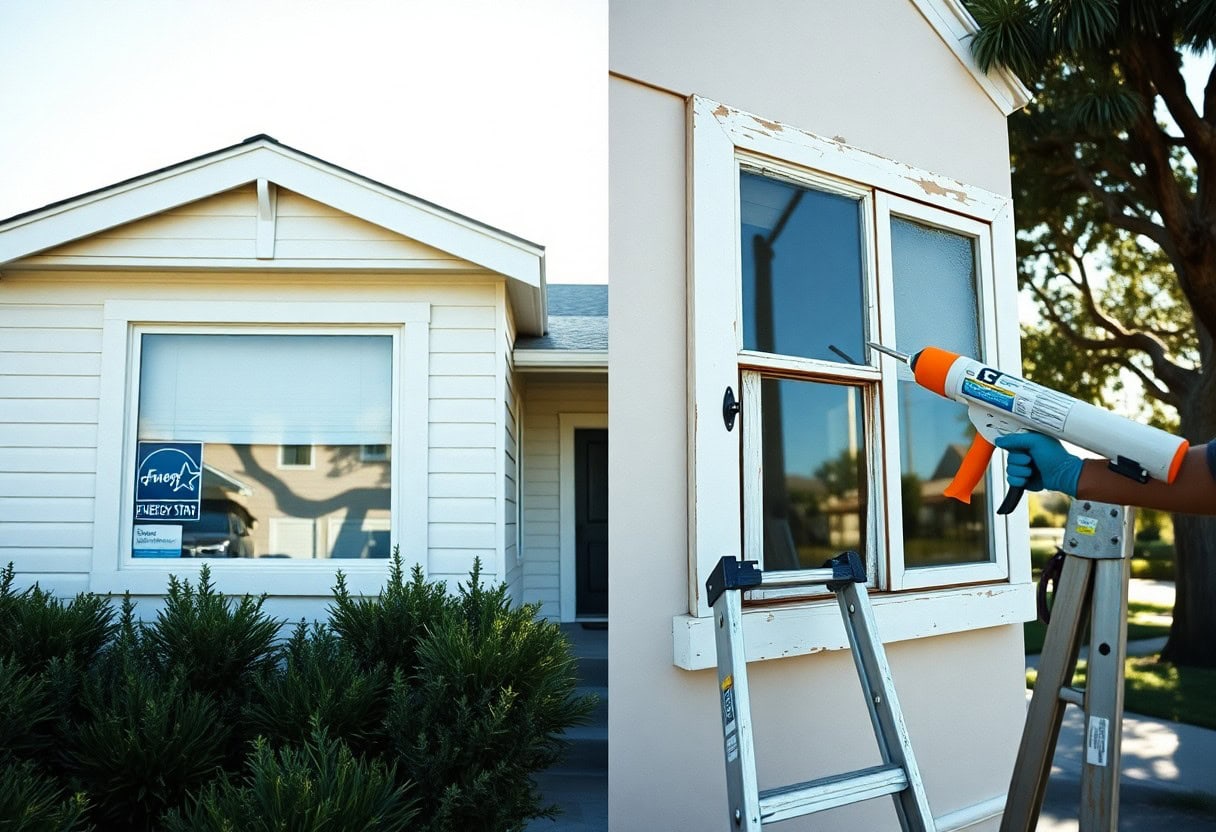
Repair vs replacement decisions for your Fremont home’s windows affect energy costs, comfort and curb appeal; you should weigh factors like frame condition, glass efficiency, scope of damage, and long-term value to determine whether targeted fixes or full replacement best protect your investment and lower operating costs.
Key Takeaways:
- Evaluate condition and performance: widespread rot, warped frames, fogged double‑pane glass, persistent drafts, or structural damage usually justify replacement; isolated hardware, sash, or trim problems can often be repaired.
- Balance upfront cost against long‑term value: repairs cost less now, but full replacement often yields better energy savings, lower maintenance, and higher resale value-factor Fremont’s climate, energy rates, and available rebates when calculating payback.
- Account for local constraints and choices: historic districts, permit requirements, and Bay‑Area sun exposure affect product and glazing selection; hire a licensed installer and check warranties to maximize durability and ROI.
Understanding Window Replacement
You’ll often choose full-frame replacement when rot, water damage, or structural issues extend beyond the sash; this swaps the entire window unit and addresses problems the old frame concealed. Typical lifespans vary by material – vinyl 20-30 years, fiberglass 25-40 years, and painted wood 30-50 years – so if your Fremont home still has original single-pane windows from before the 1990s, replacement usually delivers measurable performance gains rather than a short-term repair.
Expect installed costs in the Bay Area to range roughly $400-$1,200 per window depending on size, frame, and glass options; upgrading from single-pane to an ENERGY STAR® certified double-pane with low-E and argon fill can lower heat transfer by up to 40-50% and reduce annual heating/cooling bills by roughly 10-20% in a typical California home. Installation quality, flashing, and proper sealing matter as much as the product – poorly installed new windows can negate a large portion of glass and frame performance gains.
Benefits of Window Replacement
You’ll notice improved comfort quickly: modern insulated glazing and low-E coatings cut drafts and interior surface temperatures, reducing hot spots in summer and cold zones in winter. Noise reduction is a frequent, immediate benefit as well – moving from single-pane to insulated double-pane typically reduces outside noise transmission enough to improve sleep and reduce street-sound intrusion for homes near busy arterials in Fremont.
Replacing windows also adds resale value and lowers maintenance time; Remodeling industry surveys show homeowners recoup a significant portion of window replacement cost at sale (commonly 60-80% for midrange projects), and materials like vinyl or fiberglass eliminate the need for annual scraping and repainting you’d do with wood frames. You can also select UV-blocking glass to protect furniture and flooring – low-E glass can cut UV transmission substantially, helping to prevent fading.
Factors to Consider for Replacement
You should assess the condition of the frame, sash, and glazing: visible rot, failed thermal seals (fogging between panes), warped frames, and difficulty operating hardware are strong indicators that repair won’t be sufficient. Pay attention to performance metrics when comparing products – look for U-factor and SHGC ratings (a lower U-factor indicates better insulation; in mild Bay Area climates, an SHGC around 0.25-0.40 balances solar gain and cooling needs depending on orientation).
Material choice affects long-term performance and maintenance: vinyl offers lower upfront cost and minimal upkeep, fiberglass has higher durability and dimensional stability (better for large fixed panes), and wood provides the most natural look but requires more care. Also weigh permit and code implications – California Title 24 mandates energy performance for alterations in certain scopes, so your installer should confirm whether your project triggers those requirements.
- Condition indicators: rotted sill, interior water stains, difficulty locking, or condensation between panes.
- Performance metrics: aim for U-factor ≤0.30 for double-pane low-E in Fremont; consider SHGC by orientation (lower on west-facing windows).
- Material trade-offs: cost, maintenance, thermal break presence, and warranty terms.
- Installer qualifications: verify local experience, references, and manufacturer certifications.
- Assume that older single-pane windows over 25 years old will deliver the fastest payback when swapped for modern insulated units.
When you dig into cost versus benefit, calculate simple payback: divide net installed cost by estimated annual energy savings – many Fremont households see payback windows in 5-15 years depending on how many windows are replaced, how energy-inefficient the originals were, and whether you choose premium glazing or triple-pane options for noise reduction or extreme insulation needs.
- Estimate: replacing 10 single-pane windows with ENERGY STAR double-pane often costs $6,000-$10,000 installed and can save $300-$800 per year in combined heating and cooling.
- Orientation matters: prioritize west- and south-facing units for low-E coatings in hot exposures, and north-facing for maximum insulation value.
- Warranty and lifecycle: check glass, frame, and labor warranties and factor expected lifespan into your ROI model.
- Assume that partial replacement (sash-only) may be suitable when frames are square, plumb, and free of rot, but plan for full-frame when you see structural or water intrusion evidence.
Window Repair Options
When damage is confined to hardware, seals, or sash elements, repair is often the most cost-effective route. You can expect many common repairs to run between 10% and 40% of a full replacement price-weatherstripping and sash adjustments frequently cost under $200 per window, while more involved glass or sealed-unit repairs typically fall in the $150-$400 range.
Because Fremont’s mild, coastal-influenced climate often produces humidity-related seal failures and paint deterioration rather than full-frame rot, targeted repairs will frequently restore performance without disturbing historic trim or stucco. In many cases you’ll get a same-week turnaround rather than the multi-week scheduling and disruption that full-frame work can require.
Common Repair Techniques
Reglazing and seal replacement address fogged or cracked insulating glass units (IGUs); for a standard double-pane window, replacing the sealed unit usually costs $150-$350 per window versus $400-1,000+ for replacing the entire sash or frame. Weatherstripping, sash-cord or balance replacement, and reweighting typically run $50-$250 per sash and eliminate drafts that cause the majority of comfort complaints.
Hardware repair and lock replacement restore security and ease of use-locks, hinges and tilt latches usually cost $75-$250 each to repair or replace. For small chips and surface breaks, resin injection or glass patching can be effective when the damage is under roughly ¼ inch; larger cracks generally require IGU replacement to maintain insulating performance and safety.
Advantages of Repairing Windows
Repairing windows keeps costs down and preserves original material and sightlines: you’ll often save 50-80% compared with full replacements, depending on scope. That matters in Fremont neighborhoods with historic homes where maintaining original wood sashes, muntins, and exterior profiles can preserve property value and comply with local preservation guidelines.
Repairs are faster and produce less waste-most jobs are completed in a day or two per home and generate only a few pounds of landfill per window versus the dozens of pounds from full-frame removal. You’ll also improve immediate comfort and performance; adding storm windows or proper weatherstripping can reduce heat loss and draft complaints significantly without a full window swap.
For example, homeowners in Central Fremont who had sash balances replaced, reglazed fogged units, and added storm windows reported measurable reductions in draft complaints and HVAC on-cycling within weeks, extending useful life by 5-15 years and deferring replacement costs while keeping original aesthetics intact.
Cost Analysis
Comparing Costs of Replacement vs. Repair
When weighing immediate expenses, repairs usually run much lower per incident: sash or hardware repairs typically cost $150-$400, gasket or seal replacement for an insulated glass unit (IGU) $100-$300, and reglazing or minor frame fixes $50-$250. Full window replacements vary by material and glass: expect about $400-$800 per window for standard vinyl double‑pane, $700-$1,500 for wood or fiberglass, and $800-$2,000 for full‑frame replacements with premium glass. For a concrete example, fixing four problem windows might be $600-$1,600 total, while replacing ten windows with mid‑range vinyl units could be $4,000-$8,000.
Cost Breakdown: Repair vs. Replacement
| Repair | Replacement |
|---|---|
| Typical cost per window: $50-$400 (seal, hardware, reglaze) | Typical cost per window: $400-$2,000 (material + IGU + install) |
| Scope: patch or component replacement; preserves existing frame | Scope: full sash or full‑frame; new warranty and modern glass options |
| Average lifespan added: 3-7 years depending on issue | Average lifespan: 15-30 years for new units |
| Timeline: often a few hours per window | Timeline: single day to several days for whole home; disposal and flashing work adds time |
| Best for: isolated failures, historic sashes you want to keep, tight budgets | Best for: widespread fogging, rot, structural issues, or when upgrading to low‑E/argon glass |
You should also factor in add‑ons and local costs: low‑E coatings, argon fill, or triple‑pane glass typically add $150-$500 per window, and specialized frame work (rot replacement or structural flashing) can push a full‑frame job into four‑figure territory per opening. Labor rates around Fremont and the Bay Area will raise install costs compared with national averages, and disposal or permit fees can add several hundred dollars to larger projects. Warranties and performance guarantees on replacements often offset some long‑term risk that repeated repairs leave exposed.
Long-term Financial Implications
Payback depends on your existing windows and energy use: replacing single‑pane units with double‑pane low‑E glass often yields 10-20% lower heating and cooling bills, so if your household spends about $2,000/year on energy, you might save $200-$400 annually – a $6,000 window upgrade would therefore have an energy payback of roughly 15-30 years, plus intangible benefits like improved comfort. You can shorten that timeframe with targeted choices: upgrading high‑gain south and west exposures first, opting for low‑E coatings and argon fill, or taking advantage of California and utility rebates that commonly reduce upfront costs by several hundred to a few thousand dollars on whole‑house projects.
Over a building lifecycle, small repeated repairs add up: if you spend $300 per window every five years to address seals, hardware and minor rot, four cycles over 20 years equal $1,200 per window. Compare that with a one‑time mid‑range replacement cost of $700-$1,200 per window; for a 10‑window home, repeated repairs can total $12,000 versus a $7,000-$12,000 replacement – meaning replacement often makes financial sense over two decades, especially when you factor resale value and lower maintenance demands.
Energy Efficiency Considerations
In Fremont’s mild Mediterranean climate, glass selection and framing matter more than extreme insulation values; lowering the window U-factor from around 1.0 (single-pane) to 0.30-0.35 (double-pane low‑E) typically cuts conductive heat transfer by roughly 50-70%, which often translates into a 10-20% drop in annual heating and cooling use for an average home. You should weigh U‑factor and SHGC: lower U‑factor limits winter heat loss, while an appropriate Solar Heat Gain Coefficient (SHGC) for west- and south-facing exposures reduces summer AC load without overcooling in winter.
Choices you make also affect HVAC run-time, indoor comfort, and condensation risk; upgrading to properly installed low‑E, argon‑filled units can tighten thermal performance and reduce localized cold spots that stress older heating systems. Expect project payback commonly in the 5-12 year range depending on how many windows you replace, local energy prices, and whether you choose premium framing-replacement also tends to increase resale appeal in Fremont’s housing market.
Impact of Replacement on Energy Bills
Replacing deteriorated single‑pane or failing sealed units with ENERGY STAR-rated double‑pane low‑E windows can cut your heating and cooling bills; national case studies and DOE guidance show typical savings of 7-15% for whole‑house energy use, with higher percentages in homes that had very poor original windows. For a mid‑sized Fremont home, that often means $150-$500 per year in utility savings after a full replacement depending on orientation, insulation, and HVAC efficiency.
Costs you’ll face per window generally range from $400-$1,200 installed for standard double‑pane units, so a full home replacement running $5,000-$20,000 produces a simple payback commonly between 5 and 15 years. You’ll also gain non‑energy benefits that indirectly affect bills – fewer drafts, improved sealing, and reduced maintenance strain on your heating and cooling equipment – which can extend system life and lower repair frequency.
How Repairs Can Improve Efficiency
Targeted repairs often deliver immediate comfort improvements at a fraction of replacement cost: new weatherstripping and sash seals typically cost $10-$75 per window in materials and cut air leakage by 20-40%, while exterior caulking and frame sealing can stop water intrusion and reduce convective losses around the frame. You should prioritize repair when the glazing unit is intact and the frame is structurally sound, since those fixes can restore much of the original performance.
That said, repairs have limits-if you’re seeing fogged panes from a failed IGU, the insulating value is significantly compromised and energy gains from weatherstripping alone will be modest. When single panes are the original glass, reglazing or inserting a storm sash may be more cost‑effective in the short term than full replacement, but you’ll want to compare lifetime savings to decide.
More specifically, expect simple air‑sealing and weatherstripping projects to pay back within 1-3 years in many Fremont homes; reglazing or replacing a single insulating glass unit typically costs $150-$400 per window versus $400-$1,200 for a full replacement, so calculate whether the remaining frame life and projected window performance justify the repair.
Aesthetic and Value Implications
Effect on Home Value and Curb Appeal
Aesthetics play a measurable role in how buyers and appraisers value your Fremont home: replacement windows typically recoup around 65-75% of their cost at resale, according to recent Cost vs. Value reports, and visible window deterioration-fogged insulating glass, flaking paint, or warped frames-can shave perceived value and slow showings. You’ll see the biggest payoff on street-facing elevations and main living-room windows where curb appeal is judged first; investing in clean, modern-looking glass and matching trim often moves a listing faster and closer to asking price.
For a practical example, if your house lists for $1,000,000, a modest 2% bump from upgraded windows adds $20,000 to buyer interest – a single exterior replacement package that costs $8,000 and recoups 70% still improves net value capture and marketability. Conversely, targeted repairs (sealed-unit replacement, reglazing or repainting) can resolve the visual issues for a few hundred to a couple thousand dollars per opening, so you should weigh visible impact versus total investment when preparing the home for sale or long-term ownership.
Matching Style with Replacement or Repair
If your home’s character matters to you, repairs often preserve original details: you can reglaze historic sashes, replicate muntin profiles, and keep original wood depth so interior reveals and exterior trim remain unchanged. Replacement becomes the better tool when you want modern performance with a specific look – for instance, vinyl or aluminum-clad replacements typically run $300-$700 per window, while custom wood-clad units for period-accurate profiles can exceed $800-$1,500 each, giving you exact grille patterns, frame colors, and hardware to match Craftsman, Mediterranean, or mid-century aesthetics.
To match correctly, take precise measurements and samples of existing profiles before deciding. Even a 1/4-3/4 inch change in sightline or jamb depth is noticeable on faҫades with stucco or detailed trim; repairing original frames keeps those sightlines intact, whereas full-frame replacements often require trim modification or backbanding to preserve the original visual proportions.
Environmental Impact
When you weigh repair against replacement, consider the lifecycle energy and material flows beyond immediate performance: manufacturing new frames and insulating glass carries an upfront environmental cost that you won’t offset overnight in Fremont’s mild climate. Studies of residential retrofits show that swapping single-pane for double-pane low-E units can cut space-conditioning energy by roughly 10-20% depending on solar exposure and shading, but those annual savings often take 15-25 years to equal the embodied energy and emissions of producing and transporting new windows.
You can tilt the balance by selecting materials and practices that lower embodied impacts-buying locally produced frames, choosing windows with recycled-content framing, or prioritizing repair strategies that delay replacement until it’s truly warranted. In many cases, extending the life of an existing sash with new glazing, weatherstripping, and improved seals reduces immediate emissions and gives you the option to choose an even higher-performing replacement later with a better environmental payoff.
Sustainability of Replacement vs. Repair
Repair often wins on sustainability because it preserves the embodied carbon already invested in your current frames and glass; simple interventions like reglazing, replacing rotted wood sections, and upgrading weatherstripping commonly extend useful life by 10-20 years while costing only a fraction of full replacement. You should factor in the condition of framing: if rot or structural failure is present, replacement may be necessary, but if the frame is sound, targeted repairs deliver more greenhouse-gas reduction per dollar spent.
When replacement is unavoidable, choose high-recycled-content or long-lived materials and look for manufacturers with product transparency reports (EPDs) and take-back programs. For example, aluminum frames are energy-intensive to produce but can cut that footprint by roughly 90-95% when made from recycled aluminum; thermally broken aluminum or wood-clad options offer trade-offs between durability, maintenance, and lifecycle impact that you can evaluate against your home’s siting and projected renovation interval.
Waste Considerations in Window Projects
Typical window replacements generate more than just packaging waste: a single-family home replacing 10-12 windows can produce several hundred pounds of mixed material waste-glass, framing, sealants, and trim-that often ends up in C&D disposal streams. You should ask contractors how they handle removed materials, since salvaging intact sashes for reuse or directing metals and glass to recycling facilities significantly reduces landfill burden and keeps valuable materials in circulation.
Recycling opportunities vary by material: glass and aluminum have high recycling potential, while vinyl/PVC and composite frames are harder to recycle locally and may require specialized programs. If you prioritize waste reduction, request deconstruction (not demolition) practices that preserve trim and non-broken sashes for resale or donation, and verify whether your installer participates in take-back or manufacturer recycling schemes to keep more material out of landfills.
Additional practical steps you can take include obtaining a waste-management plan before work begins, asking for weight or diversion estimates from your contractor, and checking local Alameda County or city reuse centers for acceptance of intact windows and frames; these measures often reduce project disposal costs and increase the share of materials that are reused or recycled.
Final Words
To wrap up, you should balance short-term cost against long-term performance when deciding between repair and replacement for your Fremont home. If seals, hardware, or glass damage are isolated and frames are sound, repair can restore function and extend service life; if multiple windows are drafty, warped, repeatedly failing, or undermining your comfort and energy bills, replacement with high-efficiency units is typically the smarter investment for durability, comfort, and resale value.
If you’re unsure, get a professional inspection and written estimates for both options so you can compare projected energy savings, warranties, and total lifecycle costs. Choose repair when problems are limited and cost-effective to fix; opt for replacement when several indicators point to aging or systemic failure so your investment improves performance and reduces ongoing maintenance.
FAQ
Q: How do I decide whether to repair or replace windows in my Fremont home?
A: Evaluate age, condition, and performance. Repair is often best for isolated problems (broken hardware, cracked panes, failed weatherstripping) when the frame and sash are sound and the cost of repair is substantially lower than replacement. Replace when multiple windows show seal failure, rot, warped frames, persistent drafts, repeated repairs, or when energy savings, noise reduction, or a modern look justify the investment. Factor in long-term energy costs, resale value, and maintenance expectations when choosing.
Q: What specific signs indicate a window needs replacement rather than repair?
A: Common signs include fogging or condensation between insulated glass panes (indicating seal failure), soft or rotted frames, difficulty opening or closing that won’t correct with adjustment, extensive water damage, significant warping or shrinkage, repeated hardware failures, or visible structural damage around the window opening. If several of these appear across multiple windows, replacement is usually the better choice.
Q: Can repairing windows restore energy efficiency in older Fremont houses?
A: Targeted repairs can improve efficiency: replace failed weatherstripping, reglaze or replace single panes with low-e glass, add caulking, repair or replace sash ropes/cords, and install storm windows or interior storm panels. However, if insulated glazing units have failed or frames are thermally compromised, repairs offer limited gains and full replacement with double-pane, low-e, argon-filled units will deliver larger, longer-lasting efficiency improvements.
Q: How does Fremont’s climate affect the choice between repair and replacement?
A: Fremont’s mild Mediterranean climate reduces extreme thermal stress compared with colder or salt-exposed coastal zones, but summers can be warm and sun exposure matters. Prioritize solar control (low-e coatings), double-pane units with argon for comfort and energy savings, and frames resistant to UV and moisture. Humidity and occasional temperature swings mean that failed seals and condensation are common reasons to replace rather than repeatedly repair older insulated units.
Q: What are the typical cost differences between repairing and replacing windows in Fremont?
A: Repairs are generally lower upfront-basic fixes like weatherstripping, hardware replacement, and reglazing run from modest sums per window-while full replacement carries a higher initial cost but offers longer-term energy and maintenance savings. Expect repair projects to cost significantly less per opening; replacement costs vary by frame material, glass type, and labor. Consider lifecycle cost: multiple repairs over time can exceed a single quality replacement, which also often comes with manufacturer warranties.
Q: How long does a typical window replacement take in a Fremont single-family home?
A: A single full-frame replacement typically takes 2-4 hours per window depending on complexity; pocket or retrofit installs can be faster (often under an hour per window). Replacing all windows in a house usually takes one to several days, influenced by the number of units, access, custom sizes, any necessary repairs to surrounding trim or siding, and finishing work like paint or trim replacement. Plan for extra time if you have blinds, shutters, or interior finishes to protect or reinstall.
Q: Are there permits, local codes, or incentives in Fremont I should consider before replacing windows?
A: Minor like-for-like replacements often don’t require a structural permit, but replacements that alter rough openings, affect egress, change header framing, or alter the building envelope can require permits and inspections. Check the City of Fremont Building Division for current requirements. Also investigate utility rebates and state or regional incentive programs for energy-efficient upgrades (some programs offer rebates for qualifying low-e or high-efficiency window installations). Keep documentation of product ratings (NFRC) and contractor credentials when applying for incentives or permits.