
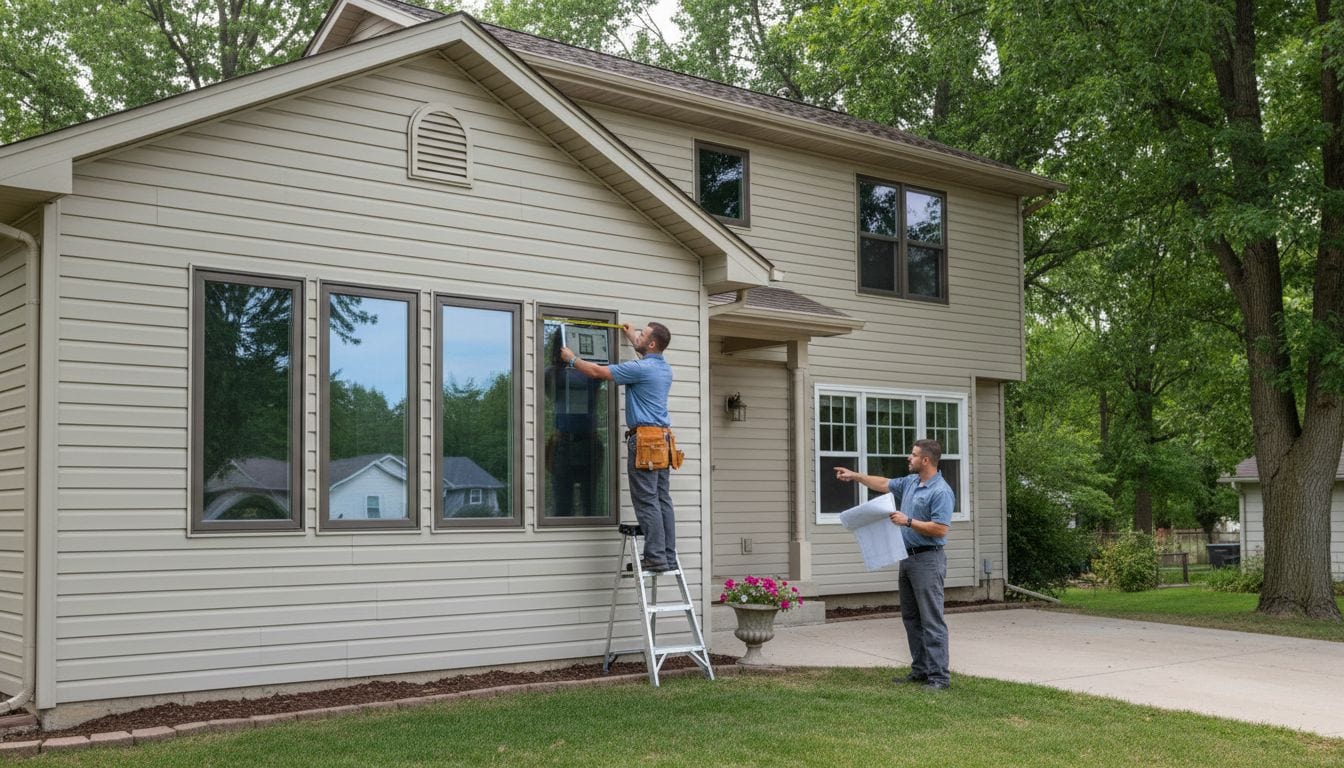
Over the life of your home, replacing windows in Omaha can substantially lower energy bills and boost resale value; this post outlines typical cost ranges, the factors that drive price (frame material, glass type, installation complexity, and labor), and practical steps you can take to get accurate quotes and choose options that suit your budget and climate.
Key Takeaways:
- Typical cost: replacement windows in Omaha usually run about $300-$1,200 per window for common sizes and materials; whole-house projects commonly range $6,000-$20,000 depending on window count and choices.
- Main cost drivers: window material (vinyl, wood, fiberglass), style and size, glazing (double vs. triple pane, Low‑E coatings), installation complexity, structural repairs, and local labor rates.
- Value considerations: energy-efficient windows can reduce heating/cooling bills and increase resale value; check local utility rebates and federal/state incentives to lower upfront costs.
Factors Influencing Window Replacement Costs
Your total cost will hinge on several measurable variables: basic unit price, labor hours, energy-efficiency upgrades, and any structural repairs. In Omaha you’ll commonly see contractor labor billed between $60 and $100 per hour, with a straightforward retrofit taking about 1.5-3 hours per window and a full-frame replacement taking 3-6 hours; that hour difference alone can add $150-$600 per window in labor.
Materials and performance options drive the rest of the variance. For example, a standard vinyl double-hung typically runs $300-$700 installed, whereas a wood or fiberglass unit of similar size can be $700-$1,200; adding a triple-pane unit or spectrally selective low-E coating generally tacks on $150-$400 per window. Local factors such as disposal fees ($50-$200 total), permit costs, and whether scaffolding or a crane is required for second-floor installs will push final invoices higher.
- Window type (single/double-hung, casement, bay/bow, picture)
- Material choice (vinyl, wood, fiberglass, aluminum, composite)
- Size and customization (custom shapes, large glazing, grids)
- Installation complexity (pocket vs full-frame, rot repair, scaffolding)
- Energy-efficiency upgrades (low-E, argon/argon-krypton fills, triple-pane)
- Local labor rates, permits, disposal, and lead times
Window Type
Different styles change both product and labor cost: a standard 24″×36″ double-hung vinyl is often on the low end ($300-$600 installed), while a casement of the same size can cost $400-$900 because of more complex hardware and sealing requirements. Bay and bow units are the most expensive per opening, commonly $1,000-$3,500 including framing and interior trim, since they require added structural work and custom fitting.
Functionality also affects long-term value; casements and awnings tend to seal better and perform higher on air infiltration tests (ASTM standards) than sliding windows, which can influence your decision if you’re chasing energy savings that can offset higher upfront costs.
Material Choice
Vinyl is the most budget-friendly and low-maintenance option, usually $200-$800 per window depending on quality and finish; it typically lasts 20-40 years. Wood commands premiums – $500-$1,200 per window – for aesthetics and resale appeal but requires painting or staining over time. Fiberglass sits between or above vinyl depending on brand ($450-$1,000) and offers better dimensional stability and higher R-values, which helps in Omaha’s hot summers and cold winters.
Aluminum and composite frames have niche uses: aluminum is economical for large expanses but poor thermally unless thermally broken, while composites combine advantages (durability, low maintenance) with mid-to-high price points. Warranties vary too – higher-end materials often include 20-30 year structural warranties versus 10-20 for basic vinyl.
Comparing lifecycle cost, a $400 vinyl window with a 25-year life annualizes to $16/yr, whereas a $800 fiberglass window with a 40-year life annualizes to $20/yr but delivers better insulation and fewer callback costs; if you plan to stay in the home long-term, higher upfront material cost can yield lower total cost of ownership.
Size and Customization
Standard sizes that match replacement-market openings keep costs down: expect a premium for any deviation. Custom-sized units or specialty shapes (arches, circles, trapezoids) commonly add $300-$2,500 per window because glass fabrication and frames are bespoke and lead times lengthen. Larger picture windows increase glass area costs exponentially – doubling the glass area can more than double the price due to thicker glass and stronger framing requirements.
Options like divided lites, custom interior/exterior colors, and decorative glass add $50-$400 per window depending on complexity; built-in blinds, security films, or obscure glass are additional per-unit charges that you’ll want to price against their utility.
Expect lead times of 4-8 weeks for standard customizations and 8-12+ weeks for complex shapes or factory-finished colors; longer lead times can increase project overhead if installers must schedule around delayed deliveries.
Installation Complexity
Pocket or sash-only replacements are usually faster and cheaper – typical labor $150-$400 per opening – whereas full-frame replacements that involve removing siding, trim, and sill can push labor to $300-$700 per window. Hidden rot, insulation replacement, or structural repairs add direct costs: minor carpentry might be $100-$400 per opening, while extensive framing work can run $500-$3,000 on top of window and installation costs.
Access and height matter: a second-floor install requiring scaffolding or a lift can add $200-$1,000 depending on vertical reach and time on-site. Also, multi-pane heavy units need more hands and often a specialty crew, increasing labor hours and insurance considerations.
Permits in Omaha are typically modest but factor in contractor time and inspections; contractor crews in the area commonly complete 3-6 typical replacements per day under favorable conditions, but that rate drops sharply with custom work or unexpected repairs.
After you tally your preferred window types, materials, sizes, and the likely level of installation work, you’ll be able to refine whether a $300-$1,200 per-window budget is realistic or if you should plan for a higher per-unit allowance to cover upgrades and complexities.
Average Costs for Window Replacement in Omaha
In Omaha you can expect installed window prices to vary widely by type and materials: basic vinyl single‑hung windows typically run $200-$600 each, mid‑range double‑hung windows $300-$900, and sliding or casement units $300-$1,000 apiece; custom or wood‑clad options often jump to $800-$2,500 per window. For a whole‑house project (10-15 windows) typical budgets range from about $3,000 for economy vinyl to $25,000+ for high‑end wood or oversized specialty units, with many homeowners landing in the $6,000-$15,000 band for mid‑range replacements.
Installation labor in Omaha commonly adds roughly $100-$250 per window depending on removal complexity, frame work, and whether you need structural repairs; energy upgrades such as Low‑E glass and argon fill generally tack on $100-$300 per window. For example, replacing 10 standard vinyl windows with Low‑E and argon typically costs $3,500-$6,000 installed, while swapping the same quantity for wood double‑hung units can reach $8,000-$12,000 once labor and trim work are included.
Single-Hung Windows
Single‑hung replacements are among the most budget‑friendly options in Omaha, with installed costs commonly between $200 and $600 each for vinyl models you’ll find at local suppliers. If you choose a basic 24×36 vinyl single‑hung with standard Low‑E glass, a typical contractor estimate will fall around $250-$350 per window including removal of the old unit and finishing trim.
Because only the bottom sash moves, single‑hung units have fewer mechanical parts and lower labor time, so you’ll save on both parts and installation when compared to double‑hung alternatives. If your home has unusually thick walls or requires new sills and flashing, plan on the higher end of the range-projects that involve rotten framing or resizing openings can add several hundred dollars per window.
Double-Hung Windows
Double‑hung windows cost more than single‑hung options, typically ranging from $300 to $900 per installed unit in Omaha, depending on material and features; mid‑range vinyl double‑hungs with tilt‑in sashes and Low‑E glass commonly land around $400-$650 each. If you want wood or wood‑clad frames, expect pricing to climb into the $600-$1,200 per window zone due to higher material and finish costs.
If you’re replacing a full set, a 12‑window double‑hung replacement with mid‑grade glass and professional installation will often total $5,000-$10,000. Features such as tilt‑in sashes for easy cleaning, sash balances with longer warranties, or integrated blinds between the glass will push the per‑window price up by $75-$250 each.
Maintenance and performance are part of the value equation: double‑hung units give you flexible ventilation and tend to fetch better resale value, but they have more moving parts so service or hardware replacement can cost $50-$200 per event over the life of the window.
Sliding and Casement Windows
Sliding windows (horizontal sliders) commonly cost $300-$800 installed in Omaha for typical sizes, while casement windows usually range $350-$1,000 per unit because of heavier hardware and crank mechanisms. Larger slider assemblies or multi‑panel configurations used on sunrooms and family‑room walls can reach $1,000-$2,500 or more, especially when you choose high‑performance glazing for better thermal control.
Casement windows often provide a tighter seal than older units, which can reduce air infiltration in Omaha’s winter months and improve heating efficiency; you’ll typically see better overall U‑factor performance with a well‑installed casement versus an old single‑pane sash. Labor for installing sliding or casement units can be slightly higher than for simple hung windows due to alignment and hardware setup, adding $50-$150 extra per window in some jobs.
When you evaluate quotes, compare not only sticker price but also hardware quality, warranty terms, and expected R‑values; a casement with stainless‑steel hardware and triple‑pane low‑U glass may cost more initially but often offers lower long‑term energy and maintenance costs in Omaha’s climate.
Additional Costs to Consider
Removal of Old Windows
You can expect removal labor to add $50-$150 per window for standard jobs, with specialty units like bay or bow windows often costing $200-$500 to dismantle because of framing and finish work. Typical removal time ranges from 30 to 90 minutes per window; if your house has hard-to-access units or multiple layers of siding, labor times (and costs) trend to the higher end.
Disposal fees and minor patching are additional line items – plan on $10-$50 per window for hauling and landfill charges, and $75-$400 per opening if you need drywall, trim, or siding repaired after removal. If your home dates before 1978 and has lead paint, professional abatement can add $200-$800 per window; have a contractor inspect and quote that separately.
Permits and Fees
If you’re changing the size of openings, altering structural supports, or doing whole-house replacements, the city will often require a building permit; in many cases in Omaha, permit fees fall in the $25-$200 range for small jobs and $100-$400 for larger projects, though costs vary by valuation and scope. Inspections tied to those permits can add $50-$150, and some contractors bundle permit costs into their estimate so you don’t handle paperwork yourself.
Contractors typically pull permits on your behalf, but you should verify that they do so and check the City of Omaha Building Services requirements before work starts. Failing to obtain required permits can lead to stop-work orders or retroactive permit fees that often exceed $200-$1,000, and can complicate future resale or insurance claims.
Energy Efficiency Upgrades
Upgrading to Low-E coatings, argon/krypton fill, or triple-pane glass will increase unit costs but can significantly cut annual heating and cooling expenses in Omaha’s continental climate. Expect incremental costs roughly as follows: Low-E + argon adds $50-$200 per window, upgraded frames or gas fills add $50-$300, and moving from double- to triple-pane can add $150-$600 per unit. For a 15-window replacement, choosing mid-range energy upgrades could add $1,500-$4,500 to your project.
Look into utility rebates and certification requirements before committing; many incentives require specific U-factor or SHGC thresholds and use of certified installers. Your local utility (for example, OPPD) and state programs may offer rebates in the range of $25-$150 per window or lump-sum incentives of several hundred dollars, and qualifying installations with documented energy savings can shorten payback periods to roughly 5-15 years depending on your heating/cooling usage.
Financing Options for Window Replacement
Home Equity Loans
If you have substantial equity in your Omaha home, a home equity loan or HELOC often offers the lowest rates for a window project – typically in the mid-single digits to low double-digits depending on your credit and market conditions. For example, borrowing $20,000 at 6% fixed over 10 years would cost about $222 per month, and interest may be deductible if the funds are used to substantially improve your home (check with a tax advisor).
You should weigh the lower-rate benefit against the fact that your home serves as collateral; defaulting can put your property at risk. Lenders commonly allow loan-to-value ratios up to 80-85% of your home’s value, so if your house is appraised at $300,000 and you owe $100,000, you could potentially access up to roughly $140,000 in combined debt capacity depending on the lender.
Personal Loans
Unsecured personal loans are an easy option when you don’t want to use your home as collateral; they’re available from banks, credit unions and online lenders with amounts typically from $1,000 to $50,000. Rates vary widely by credit score – you might see 6-10% if you have strong credit, but rates can exceed 20% for lower scores – and terms generally run 2-7 years.
Personal loans suit smaller window jobs: for instance, replacing five mid-range windows at $800 each ($4,000 total) with a 5-year personal loan at 10% would cost roughly $85 per month. Be sure to factor in origination fees (often 1-6% of the loan) when comparing offers, since they affect your true cost.
To get the best personal-loan terms in Omaha, compare offers from your local credit union (they often have competitive rates), national online lenders, and prequalified rates without hard credit pulls; a credit score above 700 typically unlocks the most favorable APRs and lower fees.
Payment Plans
Many window contractors and retailers offer payment plans or point-of-sale financing – common options include 0% APR for 6-12 months, low-rate fixed plans (6.99-14.99% for 2-5 years), or deferred-interest promotions. For example, an $8,000 full-house replacement under a 12-month 0% plan requires about $667 per month, but deferred-interest plans will retroactively charge interest if you don’t pay the promo balance in time.
You’ll often qualify for these plans more easily than for a bank loan because approval can be faster and less dependent on deep credit history; however, promotional programs can include application fees, down-payments (0-20% is common), or penalties for late payments that convert a low-rate deal into an expensive one.
Compare the total-cost sample: get an itemized amortization or payoff schedule from the contractor, ask whether deferred interest applies, and check whether the plan reports to credit bureaus – that helps you estimate long-term impact on your credit and decide if a contractor plan or a traditional loan is the better value for your window project.
DIY vs. Professional Installation
When you crunch the numbers, doing the work yourself can shave labor costs – which typically account for 20%-40% of the total installed price – but that saving often comes with trade-offs in time, quality, and risk. Simple retrofit jobs on standard double-hung windows can take a competent DIYer 1-2 hours per window, while full-frame replacements commonly require 3-6 hours per window and specialized tools; a pro crew will usually finish a multi-window job in a single day thanks to crews, scaffolding, and experience.
Beyond raw hours, you need to weigh warranty and performance expectations: improperly set windows can negate manufacturer warranties and prevent you from realizing the U-factor and SHGC ratings advertised on the unit, which in turn reduces the expected energy savings you were counting on.
Benefits of Professional Installation
You get consistent sealing, correct flashing, and attention to structural details that protect against air and water infiltration – the main causes of post-installation problems. Professionals typically provide a workmanship warranty in addition to the manufacturer’s product warranty (manufacturer warranties are often 10-20 years), so if leaks or operational failures appear within that window you have documented recourse.
Contractors also handle permit logistics, disposal of old units, and identification of hidden issues such as rotten jambs or compromised framing; addressing those on-site avoids surprise costs later and keeps the project on schedule. In many cases a professional install will preserve the window’s rated performance, helping you capture the expected energy savings of tens to a few hundred dollars per year depending on your home’s heating profile.
Risks of DIY Installation
Poor measurement, incorrect rough-opening preparation, and improper flashing are common DIY pitfalls that lead to air leaks, water intrusion, and accelerated framing rot – problems that can result in repair bills ranging from a few hundred dollars to $1,000-$5,000 for significant damage. You also risk voiding the manufacturer’s warranty if installation instructions aren’t followed exactly or if a certified installer is required for certain coverage.
Safety and code compliance are additional concerns: improper anchoring, working from ladders without fall protection, or failing to obtain required permits can create liability and insurance gaps. Time is a hidden cost too – what looks like a weekend project can stretch into multiple weekends, and the labor you spend could exceed the price difference between DIY and hiring a pro.
Finding a Reliable Contractor in Omaha
Researching Credentials
You should verify a contractor’s insurance and certifications before scheduling work: request a certificate of liability insurance showing at least $1,000,000 in general liability and proof of workers’ compensation coverage, then call the insurer to confirm the policy is active. Check for manufacturer certifications – for example, Andersen, Pella Pro, or Marvin certified installers – which often extend manufacturer warranties and indicate installation training specific to window systems used in Omaha’s freeze-thaw climate.
Memberships and local affiliations provide additional verification; look for ties to the Home Builders Association of Omaha, BBB accreditation, or positive listings on the Omaha municipal contractor registry if applicable. Also confirm the contractor’s experience with permit pulls and inspections in Douglas County or your city neighborhood, and ask for examples of past jobs with before-and-after photos from recent winters to see how installations handled thermal movement and sealing over time.
Reading Reviews
You should scan multiple review platforms – Google, Angi, Houzz, Yelp, and the BBB – and prioritize patterns over single-star extremes: repeated mentions about punctuality, clean job sites, and responsiveness to warranty calls matter more than isolated praise. Give extra weight to reviews that describe the exact work you need, such as full-frame replacements, retrofit inserts, or custom-sized openings, and note how reviewers report post-installation issues like drafts, water stains, or hardware failures.
Company responses to negative reviews are highly informative; a contractor who responds promptly, offers remediation, and documents follow-up shows a track record of standing behind workmanship. In contrast, numerous unresolved complaints about callbacks or warranty denials should raise a red flag even if the overall star rating looks good.
When evaluating review authenticity, pay attention to timing and content: dozens of five-star reviews posted in a short window or generic language without project details can indicate manipulation, while reviews with photos, dates, and specific installer names are more reliable. You can also search public complaint databases – such as the Nebraska Attorney General consumer complaint pages or the Better Business Bureau – for formal disputes and how they were resolved.
Obtaining Estimates
You should get at least three written, itemized estimates with on-site measurements; a proper bid breaks out costs for materials (brand/model), labor, removal/disposal, flashing, interior/exterior trim, permit fees, and specific performance metrics like U-factor and SHGC from NFRC labels. Expect a typical pocket retrofit on a standard double-hung in Omaha to run roughly $300-$1,200 per window installed depending on material and glass options, while full-frame replacements or specialty shapes often push per-window costs higher – for example, a 10-window job might range from about $6,000 on the low end to $14,000+ for premium products and full restoration of trim and sills.
Compare timelines, payment schedules, and warranty language across bids: common payment terms include a 20-40% deposit, progress payments, and final payment on completion with a lien waiver. Insist that the contract specify start and completion dates, who pulls permits, the exact installation method (full-frame vs insert), and both manufacturer and workmanship warranty durations so you can compare lifecycle risk and not just upfront price.
Ask each contractor for a sample contract and recent local references for similar-sized installations so you can verify performance in Omaha’s climate, and request NFRC labels or energy modeling when energy savings are part of the decision; this helps you weigh long-term savings against upfront cost and avoid lowball bids that rely on expensive change orders once work begins.
Conclusion
With these considerations, you can expect window replacement in Omaha to run roughly $300-$800 per window for standard vinyl units and $500-$1,200 or more for higher-end materials and custom sizes; full-service installs that include trim, permits, or structural repairs will push per-window prices upward, while replacing multiple windows generally reduces the per-unit cost. Your final price will hinge on window style, frame material, glass options (low-E coatings, gas fills), labor rates, and any necessary carpentry work, so treat these ranges as a planning baseline rather than a definitive quote.
When budgeting, get at least three written estimates, verify contractor credentials and warranties, and weigh long-term energy savings and improved comfort against upfront costs; selecting higher-efficiency windows can raise your initial outlay but often lowers heating and cooling bills in Nebraska’s climate and increases your home’s resale appeal, making the investment worthwhile for many homeowners.
FAQ
Q: What is the typical cost range for replacing windows in Omaha, NE?
A: Expect a wide range depending on scope and quality. Basic vinyl replacement windows typically run $300-$600 each installed; mid-range vinyl or aluminum-clad wood often cost $600-$1,000 per window; premium wood, fiberglass, or custom units commonly start around $1,000 and can exceed $2,000 per window. Whole-house projects (8-12 windows) generally fall between $3,000 and $20,000 depending on product level, size, and installation complexity.
Q: Which factors drive the final replacement price?
A: Major cost drivers include window size and style, frame material (vinyl, aluminum, wood, fiberglass), glass package (double vs. triple pane, Low-E coatings, gas fill), installation type (pocket vs. full-frame), site access and complexity (second-story or angled walls), removal and disposal of existing units, required structural repairs, local labor rates, warranty level, and the number of windows (volume discounts).
Q: How do different window styles compare in cost?
A: Common comparisons: single- or double-hung are usually the most affordable; sliders and casement windows are mid-range due to hardware and sealing; picture windows are moderate but can be large and expensive in big sizes; bay and bow windows are the most costly because they require custom framing and installation. Expect relative price increases: hung < slider/casement < picture (large) < bay/bow/custom.
Q: Will choosing energy-efficient windows significantly increase cost, and are they worth it in Omaha?
A: Energy-efficient upgrades typically add 10-40% to the upfront cost versus basic windows. In Omaha’s climate, higher-performance windows (Low-E coatings, argon/krypton fill, insulated frames, and proper installation) reduce heating and cooling losses, lowering utility bills and improving comfort. Incentives and rebates from utilities or government programs can shorten payback; check current local and federal programs before purchasing.
Q: How much of the total cost is labor versus materials?
A: Labor often represents about 30-60% of the total project cost. Simple replacements with minimal framing work skew lower on labor, while full-frame replacements, structural repairs, or second-story installations increase labor share. Itemized estimates should separately list materials, labor, and any disposal or site-prep charges.
Q: How do I get accurate estimates and choose a reliable contractor in Omaha?
A: Get at least three written, itemized estimates that include product specs, U-factor/SHGC ratings, installation method, warranty terms, and a project timeline. Verify contractor insurance and licensing, ask for local references and examples of recent jobs, confirm on-site measurements, and compare exact product models rather than general descriptions. Avoid unusually low bids and ask about warranty handling and post-installation inspections.
Q: How long does a window replacement project typically take and what disruptions should I expect?
A: Single-window replacements usually take 1-3 hours when straightforward; complex or full-frame replacements can take half a day to a full day per window. A whole-house project often spans 2-7 days depending on crew size, weather, and any unexpected repairs. Expect temporary drafts, noise, and debris during work; professional crews should protect floors and clean up daily. Permits or inspections can add to the timeline.