
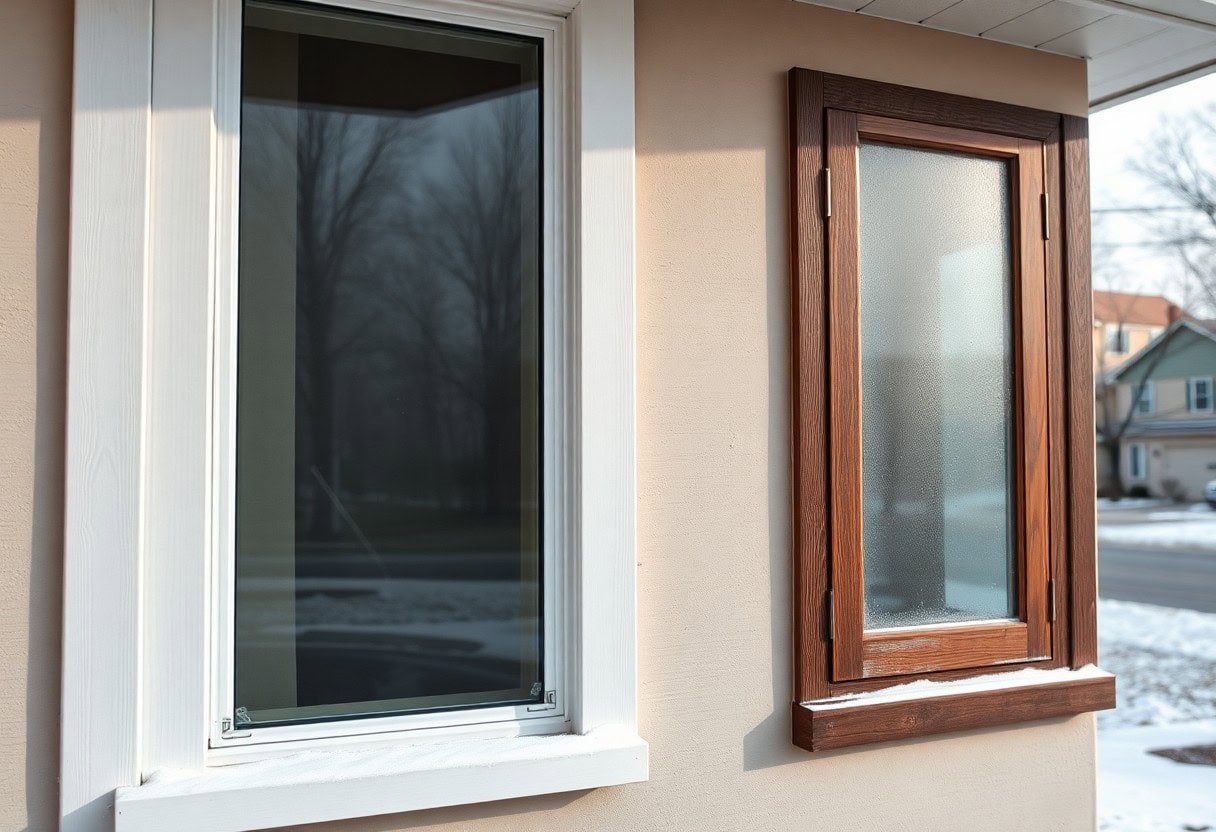
Omaha faces seasonal extremes that test window performance; you should weigh vinyl’s low maintenance, strong thermal performance, and moisture resistance against wood’s superior aesthetics, repairability, and natural insulation to choose what best protects your home’s comfort, appearance, and budget.
Key Takeaways:
- Vinyl: low-cost, low-maintenance, and energy-efficient when paired with quality glazing-well-suited to Omaha’s cold winters and humid summers for homeowners who want durability with minimal upkeep.
- Wood: offers superior aesthetics and natural insulation but needs regular sealing/painting and strict water management-choose wood or aluminum-clad wood only if willing to maintain it or for historic authenticity.
- Overall performance hinges more on proper installation, weatherstripping, and high-performance glazing (double/triple pane, low‑E, gas fills) than on frame material; prioritize those features for the best year-round comfort and savings.
Overview of Omaha’s Climate
Omaha sits squarely in a humid continental zone, with wide annual temperature swings that regularly stress building envelopes. Average July highs run about 89°F while average January lows drop to roughly 14°F, and annual precipitation is near 30 inches with roughly 34 inches of snow; extreme events can push temps below -20°F in cold snaps or above 100°F during heat waves. Those freeze-thaw cycles, combined with frequent spring storms and gusty winds, create repeated thermal and mechanical cycles that challenge window seals, glazing, and framing materials.
Because you face both high summer solar loads and long, cold heating seasons, materials that handle thermal expansion, resist moisture intrusion, and maintain low U‑factors over time will perform better. Hail and wind pressures during storm season also mean impact resistance and proper flashing matter; if a window’s exterior finish or drainage system fails, you’ll see accelerated degradation and higher maintenance costs.
Seasonal Variations
Summers in Omaha are hot and often humid, peaking in July when cooling demand is at its highest and solar heat gain through south- and west‑facing windows can drive indoor temperatures up several degrees. Spring and early summer are the most active for severe weather – hail, heavy rain, and tornado threats are concentrated from April through June – so you’ll want glazing and frames that tolerate impact and rapid wet‑dry cycles. By contrast, the main heating season runs roughly October through April, with persistent cold, low sun angles, and significant congelation that increase heat loss through single‑ or poorly sealed double‑pane units.
Given that variability, you should balance U‑factor and SHGC when choosing glazing: lower U‑factors and good air sealing reduce winter heating loads, while moderate SHGC and appropriate shading minimize summer cooling peaks. Many Omaha homeowners opt for double‑ or triple‑pane low‑E units with warm‑edge spacers plus robust installation details (sill pan, back‑dam, integrated flashing) to address both thermal performance and water management across seasons.
Humidity and Weather Patterns
Relative humidity in Omaha typically peaks in late spring and summer, with morning values commonly in the 60-70% range during humid stretches, then falling in the afternoon as daytime temperatures rise. You’ll notice condensation on glass when indoor moisture isn’t controlled and glass temps dip below the indoor dew point – for example, at 70°F and 40% indoor RH the dew point is about 44°F, so any glazing surface cooler than that will fog. That pattern drives mold risk, organic decay of wood sills, and repeated wetting cycles that can break sealants and paint.
Material responses differ: wood absorbs moisture and can swell, warp, or rot if exterior protection and paint systems fail, while vinyl can expand more noticeably with heat and may creep under prolonged high‑humidity, high‑temperature conditions. You should specify systems with proper drainage planes, desiccant‑filled spacer systems to reduce edge‑seal moisture ingress, and finishes rated for frequent wet‑dry cycling to extend service life.
In practical terms, keeping indoor relative humidity in the 30-50% range during winter and below about 60% in summer will reduce condensation events and slow material degradation; adding controlled ventilation, dehumidification in summer, and ensuring operable vents during humid spring storms are simple strategies that will help your windows perform as intended over decades.
Benefits of Vinyl Windows
For many homeowners in Omaha, vinyl delivers a straightforward package: lower upfront cost combined with long-term savings on upkeep and energy. You’ll typically find installed vinyl window prices in the $300-$900 range per window depending on size and glazing, and quality units commonly last 20-40 years before major replacement is needed. Because vinyl frames resist moisture and won’t rot or corrode like wood or metal, they handle Omaha’s freeze-thaw cycles and summer humidity with far less degradation over time.
You also benefit from design features that boost performance: multi-chamber extrusions, optional steel reinforcement for larger sashes, and UV-stabilized compounds that limit fading. If you pair those frames with double- or triple-pane insulating glass, Low-E coatings, and gas fills, you get measurable reductions in heat transfer without the maintenance burden of painted wood. In retrofit projects across the Plains, homeowners replacing single-pane wood with insulated vinyl and low-E glass have reported winter energy-use drops in the mid-teens to low-twenties percent range.
Durability and Maintenance
Your maintenance routine with vinyl is minimal: periodic washing with mild soap and water, inspection of seals and hardware, and occasional lubrication of moving parts. You don’t need to scrape or repaint, and failures you’ll most likely see are limited to seal failure in insulated units or hardware wear rather than frame decay. Quality vinyl resists swelling, splitting, and insect attack-issues that commonly affect wood in humid summer months.
Performance differences come down to build quality: choose multi-chamber frames and UV-stable formulations to avoid warping or discoloration over decades. Reinforced frames or aluminum inserts are advisable for larger openings to maintain square operation under thermal stress. Given Omaha’s temperature swings (routine winter lows into the single digits and occasional dips near −20°F), opt for products rated for wide thermal ranges and backed by at least a 10-20 year warranty to protect your investment.
Energy Efficiency
You can make vinyl windows one of the most energy-efficient components of your envelope by specifying the right glazing package. Look for double- or triple-pane IGUs with Low-E coatings and inert gas fills; typical U-factors for quality double-pane Low-E vinyl assemblies fall in roughly the 0.25-0.35 range, and units certified for Northern climate zones will meet or exceed ENERGY STAR performance thresholds. The vinyl frame itself helps too, because its lower thermal conductivity and multi-chamber design reduce conductive heat loss compared with metal frames.
In practical terms, upgrading from older single-pane windows to modern Low-E, argon-filled vinyl units often yields noticeable comfort and billing improvements: less cold-snap drafts, fewer condensation events on the glass interior, and measurable winter heating savings. In one Midwest retrofit example, a 1920s bungalow reduced winter gas consumption by about 12-18% after installing high-performance vinyl windows with Low-E/argon glazing, depending on air-sealing and other envelope improvements.
For deeper gains, pay attention to whole-window metrics and components: warm-edge spacers and high-quality seals cut edge conduction and reduce frost at the glass perimeter, while argon fill typically improves insulating performance by a modest but meaningful percentage compared with air (krypton is better still but more expensive). You should evaluate center-of-glass R-values alongside frame U-factors and installation details-proper glazing plus a tight installation yields the best real-world performance in Omaha’s variable climate.
Advantages of Wood Windows
If your home emphasizes character and longevity, wood windows deliver where vinyl often falls short: original wood sashes in many Omaha historic neighborhoods have lasted 60-100 years when properly maintained, and you can expect a well-built wood window to remain serviceable for 50+ years with periodic refinishing (typically every 5-10 years depending on exposure). You’ll pay more up front-commonly 20-40% above basic vinyl-but because wood can be repaired, refinished and matched to existing trim, the life‑cycle value and curb appeal frequently offset that premium on mid- to long-term projects.
Beyond durability, wood offers environmental and practical advantages: sustainably sourced species (pine, Douglas fir, or engineered laminated cores) have lower embodied energy than extruded vinyl or aluminum, and wood-clad options give you a warm interior finish with low‑maintenance exterior cladding. In retrofit projects across Omaha, contractors often specify wood-clad windows to preserve historic interiors while minimizing exterior repaint cycles, making them a common choice for preservation-sensitive jobs.
Aesthetic Appeal
You get unrivaled finish options with wood: stain to show grain, paint in any color, or mill custom profiles to match original muntin patterns and sash sightlines to within fractions of an inch. That ability matters in Omaha neighborhoods with Craftsman bungalows, Queen Anne, and Colonial Revival homes-matching original profiles and true divided lights can be the difference between a seamless restoration and a jarring replacement.
Real-world listings and local preservationists consistently note that homes preserving original woodwork and period-accurate windows tend to command a premium in resale and appraisals; rehabilitation case studies in the region show preservation-based restorations often recoup a higher percentage of project cost versus wholesale replacement. For your project, that means choosing wood can enhance both visual authenticity and market perception.
Natural Insulation Properties
Wood’s cellular structure gives it a much lower thermal conductivity than metal-softwoods run around 0.12-0.15 W/m·K versus aluminum at roughly 200 W/m·K-so your interior sash and frame stay closer to room temperature and reduce thermal bridging. In practical terms, a high-quality wood window paired with double-pane low‑E glass and argon fill can deliver whole-window U-values in the neighborhood of 0.25-0.30 BTU/(hr·ft²·°F), which helps keep your living spaces warmer in Omaha’s cold snaps and reduces surface condensation risk.
If you’re seeking even better performance for Omaha’s -10°F to -20°F extreme cold events, look at engineered wood frames combined with triple-pane glazing and krypton fill; those assemblies can push U-values down toward 0.18-0.22 and cut conductive heat loss substantially compared with single- or basic double-pane units. That performance matters when you’re trying to lower winter heating loads without sacrificing the historic look of your home.
Keep in mind that glazing and gas fills drive most of the window’s overall thermal performance, so pairing wood frames with low‑E coatings, proper argon/krypton fill, and tight installation will yield the biggest real-world savings; field studies in the Midwest indicate replacing single-pane windows with modern insulated double- or triple-pane units can reduce envelope-related heat loss by a significant margin, often translating into noticeable reductions in your seasonal heating demand.
Cost Comparison
Side-by-side cost snapshot
| Vinyl | Wood |
|---|---|
| Material cost per window: $100-$400 | Material cost per window: $300-$900 |
| Installed (standard double‑hung): $300-$800 | Installed (standard double‑hung): $700-$1,500 |
| Custom/historic sizes: $600-$1,200 | Custom/historic sizes: $1,200-$3,500+ |
| Expected lifespan: 20-35 years | Expected lifespan: 30-100+ years (with maintenance) |
| Annual maintenance costs: $0-$50 (cleaning, seal checks) | Annual maintenance costs: $100-$500 (paint/stain, repairs) |
| Typical energy savings vs single‑pane: 10-20% (roughly $150-$350/yr) | Typical energy savings vs single‑pane: 12-25% (similar $ savings when glazing matches) |
| Resale/esthetic value: moderate; practical but less period authenticity | Resale/esthetic value: high for period homes; can add visible value |
Initial Investment
When you price a window project in Omaha, vinyl typically delivers the lowest upfront number: a standard mid‑range vinyl double‑hung runs about $300-$800 installed, whereas comparable wood windows start around $700 and can exceed $1,500 once labor and finishing are included. For a typical 10‑window replacement on a 1,200-1,800 sq ft bungalow, expect vinyl totals near $5,000-$8,000 installed; wood replacements commonly land in the $12,000-$20,000 range, especially if you choose custom profiles or historic replication.
If your house has nonstandard openings or historical trim, you should budget substantially more for wood. Custom millwork, onsite painting or staining, and skilled carpentry add both time and cost; installers often charge $50-$150 more per window for complex jamb reconstruction. Conversely, you can often save on vinyl by purchasing standard replacement units and using efficient retrofit installation methods that reduce labor hours.
Long-term Value
You’ll see the difference in long‑term value once maintenance and lifespan get factored in: vinyl’s lower upfront cost plus minimal upkeep can make it the cheaper option over a 20-30 year horizon, especially if you plan to sell within that timeframe. Vinyl requires little beyond periodic cleaning and occasional seal inspection, so your ongoing outlays often stay under $50 per year per window.
On the other hand, wood can outlast vinyl by decades when you maintain it, and that longevity translates to fewer full replacements over a homeowner lifetime. If you invest $15,000 in high‑quality wood today and commit to regular painting and seal work, you may avoid a second full replacement that a vinyl system would likely need after 25-30 years-effectively lowering your cost per year of service over time.
For example, a local retrofit in Omaha replaced 10 single‑pane windows: the homeowner paid about $6,500 for mid‑range vinyl and saw an estimated 10-12% drop in winter heating demand, while a neighbor’s choice of custom wood at roughly $15,000 delivered similar immediate energy performance but added measurable curb appeal and preserved historic character, factors that boosted perceived resale value in that neighborhood.
Environmental Considerations
When you compare materials side-by-side, think in terms of lifecycle: raw-material extraction, manufacturing emissions, service life, and end-of-life disposal or reuse. Vinyl (PVC) production consumes more fossil-derived feedstocks and energy up front, while wood stores carbon from the day the tree is felled; typical service lives reflect that difference-vinyl windows commonly last 20-40 years, whereas well-maintained wood windows often reach 40-100 years. That means the embodied impacts of a wood window are spread over more service years, often lowering its annualized footprint even if its initial manufacturing impact appears higher on paper.
You should also factor in maintenance and disposal. Replacement frequency drives total environmental cost: if you replace vinyl twice in the time a single wood unit performs, your cumulative material and waste stream increase. Salvageability matters too-wood can be reclaimed or reused, and water-based, low-VOC finishes are widely available; PVC recycling exists but is limited, and many window assemblies end up downcycled or landfilled rather than returned to closed-loop manufacture.
Sustainability of Materials
You can reduce your project’s footprint by choosing certified or reclaimed options: FSC-certified or salvaged hardwoods lower pressure on forests, while some manufacturers now offer vinyl frames with 20-30% recycled PVC content. Sourcing matters-locally milled wood and regional manufacturers cut transportation emissions, and reclaimed sash from historic homes can deliver significant carbon savings versus new frames.
Think in terms of service-years per kilogram of embedded material. For example, doubling window lifespan cuts annualized embodied impacts roughly in half; if a wood window lasts 60 years versus a vinyl unit at 30 years, the per-year embodied carbon of the wood option is substantially lower. You should also inspect finish systems-low-VOC waterborne stains and catalyzed finishes reduce indoor emissions and environmental harm during finishing and disposal.
Impact on Energy Consumption
You’ll get the biggest operational benefit from glazing and installation rather than frame choice alone: whole-window U-factors and SHGCs drive seasonal performance. Typical double-pane low-E windows achieve whole-window U-factors around 0.27-0.30, while high-performance triple-pane units drop into the 0.18-0.22 range. In Omaha’s north-central climate, windows that meet ENERGY STAR-level performance (U-factors roughly in the high 0.20s to low 0.30s, depending on orientation) will reduce winter heat loss substantially compared with single-pane or non-coated glazing.
Fill gas, spacer, and installation nuances matter: argon fill commonly improves center-of-glass U-values by roughly 10-15% versus air, and warm-edge spacers reduce thermal bridging and condensation risk at the glass edge. You should prioritize a complete assembly-proper flashing, insulated jambs, and airtight sealing-because installation errors can erase much of the theoretical efficiency advantage of a higher-performing frame or glazing package.
For Omaha specifically, balance matters seasonally: winter lows frequently dip below 0°F and summers climb into the 90s, so selecting low-E coatings tuned for mixed climates or using higher SHGC on south-facing windows to harvest winter solar gain (SHGCs commonly range 0.25-0.50) will improve year-round energy use. A practical target for many Omaha homes is a double-pane low-E, argon-filled unit with a warm-edge spacer and whole-window U≈0.27 and SHGC≈0.30-0.35-this combination typically delivers the best trade-off between winter heating savings and summer cooling control while keeping condensation and comfort issues to a minimum.
Choosing the Right Window
Factors to Consider
You should prioritize measurable performance over aesthetics alone: aim for windows with a U-factor around 0.30 or lower for double-pane low-E/argon units in Omaha, and consider U-factors in the 0.18-0.25 range if you opt for triple-pane on north-facing or draft-prone exposures. Pay attention to frame behavior in humid summers and freeze-thaw winters – vinyl typically tolerates moisture without rot but expands roughly three times more than wood over wide temperature swings, while wood offers better long-term thermal stability if you plan to paint and seal every 5-10 years. Expect typical service lives of about 20-40 years for vinyl frames and 40-80 years for well-maintained wood frames, and factor that into lifecycle cost calculations.
- Insulation: U-factor (heat flow) and SHGC (solar gain) tailored to window orientation
- Glazing package: low-E coating, argon/krypton fill, and warm-edge spacers
- Frame material: thermal bridging, expansion rate, susceptibility to moisture and rot
- Installation details: flashing, sill pans, and air-sealing to prevent infiltration
- Maintenance & longevity: repainting intervals for wood, vinyl cleaning and seal checks
- Cost vs. payback: typical replacement vinyl window ranges $300-$900; wood $600-$1,500 per unit depending on size and trim
- Local stressors: high winds, hail risk, and seasonal humidity that affect seal longevity
Assume that a balanced choice – for example, a well-installed double-pane low-E/argon sash with a durable frame and proper flashing – will often deliver the best return in Omaha, cutting heating and cooling loads by roughly 10-20% compared with older single-pane windows while minimizing maintenance headaches over a 10-year horizon.
Professional Recommendations
You should hire installers experienced with Omaha building envelopes who specify both product and installation details: request low-E coatings on the glass surface facing the cavity, argon fill, warm-edge spacers, and a U-factor target (≤0.30 for most replacements; consider ≤0.22 for high-performance builds). Contractors familiar with local codes will recommend impact- or high-wind-rated units for exposed elevations and will size and shim frames to accommodate vinyl’s thermal expansion or wood’s susceptibility to moisture movement.
Ask for references from recent projects in Omaha, verify that the installer uses sill pans, backer rod and low-expansion foam at the jambs, and confirm that the warranty covers both product and installation; getting a blower-door test or thermal-camera inspection before and after installation provides quantifiable evidence of air-sealing quality and helps you compare contractor performance on identical homes.
Conclusion
Presently, given Omaha’s hot summers, cold winters and frequent freeze-thaw cycles, you need windows that manage thermal stress and moisture reliably; high-quality vinyl windows deliver strong energy performance, low maintenance and good moisture resistance when you choose multi-chamber frames, proper glazing and professional installation, making them a practical, cost-effective option for many homeowners.
If you prioritize traditional aesthetics and long-term repairability, wood frames can offer superior appearance and solid insulation when you commit to regular exterior protection or select wood-clad options, but that requires ongoing upkeep; for most Omaha households seeking the best balance of durability, efficiency and low maintenance, well-built vinyl or wood-clad windows are the most effective choices for your climate and budget.

FAQ
Q: Which window material provides better energy efficiency in Omaha’s hot summers and cold winters?
A: Both materials can be energy efficient when paired with quality glazing and proper installation. Vinyl frames have good insulating value and thermal breaks that limit heat transfer; they perform consistently at a lower cost. Wood has natural insulating properties and can perform equally well when combined with multi-pane, low-E glass and gas fills. For most Omaha homeowners seeking the best balance of performance and price, high-quality vinyl or wood-clad windows with double- or triple-pane low-E glass are recommended.
Q: How do vinyl and wood windows handle moisture, snow, and freeze-thaw cycles common in Omaha?
A: Vinyl resists moisture and will not rot or corrode, making it a low-maintenance choice in wet conditions; however, extreme temperature swings can cause some vinyl profiles to expand and contract. Solid wood is vulnerable to rot, swelling, and paint failure unless properly sealed and maintained; regular repainting and caulking are needed to protect wood from Omaha’s moisture and freeze-thaw cycles. Wood-clad (wood interior with protective exterior cladding) and fiberglass alternatives offer the aesthetics of wood with improved exterior moisture resistance.
Q: What differences in durability and expected lifespan should homeowners expect?
A: Vinyl windows commonly last 20-40 years depending on quality, exposure, and maintenance (cleaning, hardware lubrication). Well-built wood windows can last 30-100+ years if regularly maintained-sanding, repainting, and prompt repair of any water intrusion. High-end wood-clad and fiberglass frames also offer long service life with less routine care. Warranty terms and installation quality significantly affect real-world longevity.
Q: What are the maintenance requirements for each option?
A: Vinyl requires minimal maintenance-periodic cleaning, track clearing, and occasional hardware adjustment-but cannot be refinished if scratched or discolored. Wood requires more upkeep: regular painting or staining, caulking, and inspection for rot or insect damage; damaged trim must be repaired promptly to avoid structural problems. Wood-clad windows reduce exterior maintenance while preserving interior wood appearance.
Q: How do initial costs and long-term lifecycle costs compare?
A: Vinyl windows generally have the lowest upfront purchase and installation costs. Wood and wood-clad windows carry higher initial costs and higher ongoing maintenance expense. Over a long lifecycle, total cost depends on maintenance practices, local energy prices, and replacement frequency; a well-maintained wood window can outlast multiple vinyl units, but ongoing maintenance increases lifetime expense. Obtain multiple quotes and factor warranties and expected service life into cost comparisons.
Q: Which option is better for historic or architecturally significant homes in Omaha neighborhoods?
A: Wood is typically preferred for historic properties because it matches traditional profiles, muntin styles, and paintable finishes required by many preservation guidelines. When authenticity is required but lower exterior maintenance is desired, wood-clad or high-quality fiberglass windows that replicate historic profiles are good alternatives. Always check local historic district rules before selecting a replacement material.
Q: Given Omaha’s climate and local building practices, how should homeowners decide between vinyl and wood?
A: Base the decision on budget, desired appearance, willingness to maintain, and local regulations. Choose high-quality vinyl for lower cost and minimal upkeep; choose wood (or wood-clad/fiberglass) if authentic appearance and potential for longer life with maintenance matter. Prioritize professional installation, proper flashing, and high-performance glazing regardless of frame choice to maximize energy performance and prevent water issues in Omaha’s climate.