
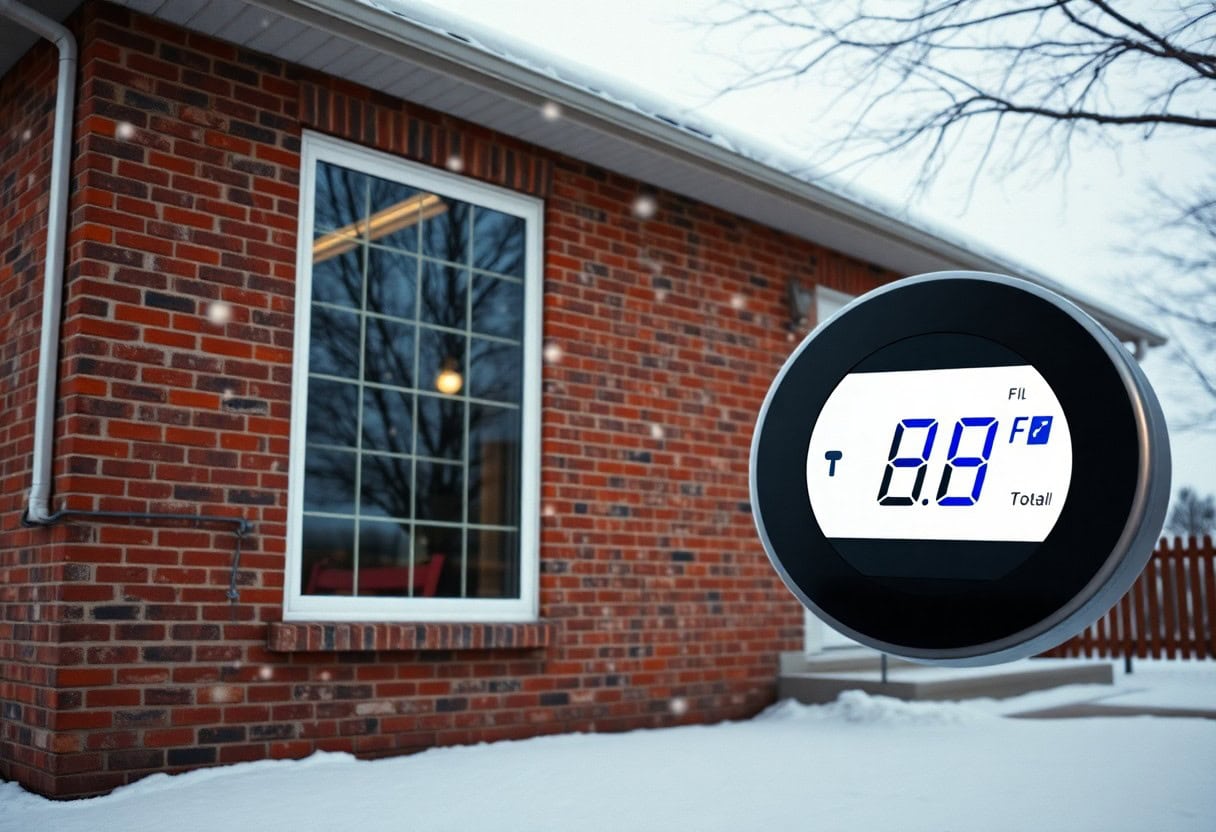
Windows upgrades can significantly lower your heating costs in Fremont, NE by reducing heat loss with double- or triple-pane glass, low-E coatings, and improved seals; when you choose high-performance frames and professional installation you minimize drafts, stabilize indoor temperatures, and allow your heating system to run less frequently, resulting in measurable energy savings and increased comfort for your home.
Key Takeaways:
- High-performance windows (double/triple glazing, low-E coatings, insulated frames) reduce heat loss during Fremont’s cold winters, lowering furnace runtime.
- Proper installation and upgraded seals stop drafts and air leakage, improving comfort and cutting wasted energy.
- Lower heating demand reduces utility bills and HVAC wear, and may qualify homeowners for local or state energy rebates and incentives.
Benefits of Energy-Efficient Windows
Upgrading from single-pane glazing (U‑factor ≈ 1.1 BTU/hr·ft²·°F) to double-glazed low‑E windows (U‑factor ≈ 0.30) or to triple‑glazed units (U‑factor ≈ 0.18-0.25) cuts conductive heat transfer substantially, often reducing window heat loss by 60-80%. You’ll notice that lower U‑factors and reflective low‑E coatings reduce the workload on your furnace during Fremont’s long heating season, while argon or krypton fills further improve insulating performance by roughly 10-15% compared with air-filled cavities.
That thermal improvement translates into measurable savings: field studies in cold climates commonly report space‑heating reductions in the 10-20% range when homeowners replace single‑pane windows with high‑performance units, though your exact savings depend on existing insulation, window area, and fuel price. You can also expect reduced condensation, more even indoor temperatures, and a typical payback window often between about 5 and 12 years for whole‑house retrofits in the region.
Insulation Properties
Glazing system choices determine the bulk of the insulation gain. A double‑glazed low‑E window with argon has an effective R‑value around R‑3.3 (U≈0.30), while a triple‑glazed assembly moves that toward R‑5.0 (U≈0.20). Warm‑edge spacers, insulated frames (vinyl, fiberglass, or thermally broken aluminum), and multilayer low‑E coatings all reduce edge and frame conduction, lowering the overall heat flow you need to replace during subfreezing nights.
To put it in concrete terms: if you have 100 sq ft of single‑pane windows and a 30°F indoor-outdoor temperature difference, conductive heat loss is roughly 3,300 BTU/hr (U≈1.1). Replacing those with U≈0.30 units drops that to about 900 BTU/hr-a savings of 2,400 BTU/hr for that surface area. That kind of reduction directly lowers runtime and cycling of your heating system, improving both comfort and system longevity.
Reduced Air Leakage
New high‑performance windows also cut infiltration through improved sash seals, compression gaskets, multi‑point locking hardware, and tighter frame tolerances; many modern units test below 0.3 cfm/ft² for air leakage, whereas older or poorly maintained windows commonly exceed 0.5 cfm/ft². Proper installation with sealed jambs and foam backer‑rod prevents drafts at the frame‑wall interface, so you’ll feel fewer cold spots and need less supplemental heating to maintain setpoints.
More specifically, replacing leaky windows and sealing frames during installation can reduce window‑area infiltration heat loss by 30-50%, and when combined with a comprehensive air‑sealing program it can lower whole‑house infiltration by 10-25% on measured blower‑door tests. For you, that means fewer cold drafts, less short‑cycle boiler or furnace operation, and a clearer, calculable impact on your winter fuel consumption.
Types of Energy-Efficient Windows
Different combinations of glazing, gas fills, coatings and frame design change how much heat your windows let escape in Fremont’s winter and how much solar gain they admit in summer. The brief table below breaks common options into practical performance and installation notes so you can compare U‑factor, typical uses and what to expect from each system.
| Window Type | Key features and performance |
|---|---|
| Double glazing (low‑E + argon) | U‑factor commonly 0.30-0.45; argon fill reduces conduction vs. air; cost‑effective retrofit choice for most Fremont homes. |
| Triple glazing (low‑E + krypton or argon) | U‑factor often 0.18-0.30; best for very cold exposures or large window areas; higher upfront cost but smaller heat‑loss area. |
| Low‑E coatings (hard and soft coats) | Reduce infrared heat transfer; can lower U‑factor and control SHGC; coating placement determines winter vs. summer performance. |
| Insulated frames & warm‑edge spacers | Frame materials (fiberglass, vinyl, composite) and warm‑edge spacers cut thermal bridging and condensation risk; improve whole‑window R value by 10-25%. |
- South‑facing units: prioritize slightly higher SHGC low‑E to capture winter solar gain.
- North or shaded exposures: choose lower SHGC and lower U‑factor to limit conductive loss.
- If replacing many windows, mixing double and triple glazing can balance budget and performance.
- Warm‑edge spacers and properly insulated frames often deliver quicker payback than premium glass upgrades alone.
Double and Triple Glazing
When you move from single‑pane to double glazing with low‑E and argon, expect window U‑factors to fall into the 0.30-0.45 range; that typically cuts heat loss through glazing by roughly 60-70% compared with single glazing. Double‑pane assemblies are the most cost‑effective retrofit for Fremont houses – they pair well with insulated frames and warm‑edge spacers to reduce condensation and frame conduction at temperatures below freezing.
Triple glazing reduces U‑factors further (often 0.18-0.30) and is worth considering if you have large south‑oriented glass areas, a very airtight shell, or windows that face prevailing winter winds. You should weigh the higher initial cost and added weight against the marginal heat‑loss reduction: in many Midwest retrofits, triple glazing yields the best returns only on very cold exposures or when combined with high‑performance frames and professional installation to avoid thermal bridging.
Low-E Coatings
Low‑emissivity coatings work by reflecting long‑wave infrared radiation back into the room while letting visible light through; that lowers U‑factor and can be tuned to control solar heat gain (SHGC). Hard‑coat (pyrolytic) low‑E is durable and common on single or double panes, while soft‑coat (sputtered) low‑E offers higher performance and is typically used in multi‑pane insulating glass units – placing the coating on surface 2 or 3 matters for winter performance versus summer control.
For Fremont winters you generally want a low‑E configuration that favors solar gain on south windows (higher SHGC) and minimizes heat loss on north windows (lower U‑factor). Combining low‑E with argon or krypton fills and warm‑edge spacers multiplies the benefit: a double‑pane low‑E/argon window with a U≈0.30 plus warm‑edge spacer will outperform a plain double pane by a measurable margin in both energy bills and interior comfort.
Knowing which coating type, placement (surface 2 vs. surface 3), and SHGC target suits each orientation helps you optimize every window replacement project for the best seasonal savings.
Impact on Heating Costs
Cost-Savings Analysis
Replacing single-pane or aging double-pane windows with low-E, insulated-frame units typically reduces your heating energy use by about 7-15% nationwide, according to the U.S. Department of Energy; in Fremont’s prolonged below-freezing stretches that reduction often trends toward the higher end of the range. Upgrading from a U‑value near 1.0-1.2 (single pane/old units) to modern double-pane low‑E assemblies with U‑values around 0.30-0.40 or to triple‑pane units near 0.20-0.30 cuts conductive heat loss substantially, which directly lowers furnace runtime and gas or electric consumption.
On a practical level, if your home typically spends $1,500 per year on heating, a 10% savings equals about $150 annually; for larger or draftier homes the savings can be $200-$400 a year. You should also factor window area: replacing 12 standard windows in a 2,000 sq ft older house will produce noticeably larger dollar savings than replacing two small bathroom windows, because heat loss is proportional to glazed area and orientation (south‑facing windows perform differently than north‑facing ones in winter).
Long-Term Investment
High-performance windows are an investment that pays back over time through energy savings, reduced HVAC cycling, and increased comfort; typical replacement costs vary widely but often fall in the $400-$900 per window range installed, depending on frame material and glass package. Given those costs, simple payback commonly ranges from roughly 7 to 15 years-shorter if you qualify for rebates or tax incentives or if your existing windows are especially inefficient-and the physical lifespan of quality vinyl, fiberglass, or clad‑wood windows is commonly 20-30 years, extending the period of net benefit.
You also gain indirect long-term value: reduced furnace runtime can delay costly HVAC repairs or replacement, and buyers increasingly notice energy-efficient upgrades when pricing homes in the Midwest market. Regional retrofit projects often show that the combined value of lower utility bills, greater comfort, and improved curb appeal recoups a significant portion of the upfront expense at resale, especially when paired with other envelope improvements like attic insulation.
To refine your own return estimate, get an energy audit and compare manufacturer U‑values, SHGC, and whole‑house modeling: input your current annual heating spend, projected local energy price inflation (2-3% annually is a reasonable assumption), and any local utility rebates to calculate net present value and payback so you can decide which window package gives you the best long‑term financial outcome.
Local Climate Considerations
Climate Factors in Fremont, NE
Winters in Fremont bring frequent subfreezing temperatures and intermittent snowstorms, with typical January highs in the low-30s°F and lows often in the mid-teens°F. Those conditions produce roughly 5,000-6,000 heating degree days (base 65°F) annually for much of eastern Nebraska, meaning your heating system runs a lot of the season and windows become a major heat-loss pathway. You’ll also face freeze-thaw cycles, wind-driven infiltration from northwest storms, and occasional rapid temperature swings in spring and fall that stress seals and frames.
- Older single-pane windows can be responsible for up to 25-30% of a home’s heat loss in these conditions, increasing fuel consumption during the coldest months.
- Persistent winds and temperature cycling accelerate seal failure and promote condensation, so you should prioritize durable spacer systems and airtight installation.
- South-facing glazing offers valuable passive solar gains in winter, while east/west exposures can add cooling loads in summer-orientation matters when balancing U-factor and SHGC.
- Assume that Fremont’s frequent subfreezing lows (around 15°F on many winter nights) and the region’s 5,000-6,000 heating degree days make low U-factor, high-quality seals, and insulated frames primary factors when selecting windows.
Selecting the Right Windows for Your Area
You should target windows with U-factors in the 0.25-0.30 range for a strong balance of performance and cost in Fremont; triple-pane units can push U down below 0.20 but cost more up front. Aim for a low-E coating optimized for winter performance (soft-coat low-E on the inner glazing), argon or krypton fill between panes, and warm-edge spacers to reduce edge heat loss. For south-facing windows pick a moderate to higher SHGC (around 0.35-0.50) to capture winter sun, and for north-facing exposures prioritize the lowest U-factor possible to limit conductive loss.
Frame choice matters: fiberglass and insulated vinyl frames offer low thermal conductivity and stable dimensions during freeze-thaw cycles, while wood-clad frames give good thermal resistance but require more maintenance. Professional installation with continuous flashing, airtight jamb seals, and spray-foam or backer-rod around the unit can reduce infiltration by 30-50% compared with poorly installed replacements, so factor installation quality into your cost-benefit calculations.
Also check ENERGY STAR North-Central recommendations and local utility or state incentive programs before purchasing; rebates and tax incentives can shorten payback timelines, and product labeling (U-factor, SHGC, and NFRC ratings) gives you the verifiable metrics needed to compare models for Fremont’s specific climate.
Installation and Maintenance
Proper installation determines whether the high-performance windows you select actually deliver the projected U‑factor and air-sealing benefits; a poorly installed unit can erase 10-30% of the expected heating savings. You should plan for 1-4 hours per window for a standard retrofit and 2-4 days for a whole-house replacement of 8-12 windows, with total installed costs commonly ranging from about $300 to $1,000 per window depending on frame material, glazing package, and whether you choose full‑frame or pocket replacement. Full‑frame installs generally restore the full thermal envelope and let you add modern flashing and insulation; pocket replacements are faster and cheaper upfront but can leave hidden air leaks if the jamb and sills aren’t addressed.
Expect a lead time of 2-8 weeks for typical energy‑efficient units; confirm that quoted pricing includes removal, disposal of old windows, flashing, insulating foam/caulk, and a written labor warranty (many installers offer 1-10 years on labor while manufacturers provide 10-20 years on glass/coatings). You should require an itemized contract and photos of the planned work area, and ask the installer to perform a post‑install checklist that verifies sealant continuity, shim placement, and that interior/exterior trim is weather‑tight-these details directly affect long‑term heat retention and condensation risk.
Choosing Professional Installers
You should prioritize firms that demonstrate measurable energy expertise: look for installers with AAMA certification, NFRC labeling practices, or documented ENERGY STAR installation experience. Ask for three local references and before/after data whenever possible-specifics like “replaced 10 wood single‑pane windows with double‑glazed low‑E units and saw a 15% winter gas reduction” give you a clearer picture than vague testimonials. Verify that the crew will handle full‑frame removal if needed, install continuous flashing, and use closed‑cell foam for insulation rather than expanding construction foams that can gap over time.
Request a written scope that names the glass, U‑factor, SHGC, frame material, and the exact installation method (full‑frame vs pocket). You should compare at least three bids and evaluate warranties: typical manufacturer warranties cover glass defects for 10-20 years while installers commonly offer 1-10 years on workmanship; also confirm whether the installer will perform an optional blower‑door or infrared check to validate the air‑sealing performance post‑installation.
Regular Maintenance Tips
Inspect seals and weatherstripping at least twice a year-ideally before the heating season and after spring thaw-and address any gaps, cracked caulk, or compressed foam that you find. Clean tracks and weep holes quarterly and lubricate moving hardware with a silicone‑based lubricant to prevent binding; you should plan to replace failed insulated glass units (IGUs) when you see persistent interpane condensation, since a failed IGU can cut insulating performance by roughly half. Typical IGU lifespans range from 10 to 25 years depending on exposure and installation quality.
- Check caulk and exterior flashing for cracks and reseal with a high‑quality exterior silicone.
- Vacuum and wipe tracks; clear weep holes so water drains properly and doesn’t freeze in winter.
- Replace compressed or missing weatherstripping to limit cold drafts around sashes.
- Thou schedule IGU replacement promptly if you detect fogging between panes to restore R‑value and prevent freeze damage.
You should also monitor condensation patterns: interior condensation primarily indicates high indoor humidity (addressable with ventilation or a dehumidifier), while persistent exterior frost or moisture between panes points to seal failure. For wood frames, repaint or re‑stain every 3-7 years depending on sun exposure; for vinyl or aluminum frames, inspect thermal breaks and tighten loose screws on hardware annually. Seasonal checklist habits-cleaning, lubricating, and a fast visual seal check-typically take 20-45 minutes per window and prevent accelerated heat loss over time.
- Set calendar reminders for spring and fall maintenance to keep seals and drainage functioning through Fremont’s freeze‑thaw cycles.
- Keep a photo log of any seal failure or hardware problems so warranty claims are supported by dated evidence.
- Use only non‑abrasive cleaners and avoid solvents on low‑E coatings to protect long‑term performance.
- Thou contact your installer for warranty repairs as soon as you document issues to avoid voiding workmanship guarantees.
Financing Options for New Windows
When budgeting for replacement windows in Fremont, expect typical installed costs to range roughly $400-$1,200 per window depending on frame material, glazing (double vs. triple), and labor; a whole-house midrange job of 8-12 windows commonly falls between $6,000 and $15,000. You can often shorten payback periods by stacking incentives with financing: if your upgrade cuts heating bills by $300-$600 per year (typical for switching from single‑pane to low‑E double glazing in this climate), a $8,000 project can reach net savings that materially offset annual loan payments within 8-12 years, depending on your financing terms and local energy prices.
Compare options side-by-side before signing: contractor 0% promotions may look attractive but often convert to high rates after a deferral period, while secured options such as a HELOC will typically offer lower APRs (often several points below unsecured loans) but use your home as collateral. Look for combined strategies – small upfront cash plus a short-term loan or an energy-focused program like PACE or utility rebates – to lower your monthly outlay and maximize long‑term savings.
Rebates and Tax Incentives
Many utility programs and regional energy-efficiency initiatives offer rebates for ENERGY STAR‑rated or equivalent windows; rebate amounts frequently range from roughly $25-$200 per qualifying window or $250-$1,500 for whole‑house efficiency packages, depending on the utility and program year. You should verify product eligibility (model numbers and U‑factor/SHGC thresholds), program caps, and whether a pre‑ or post‑inspection is required – failing to submit required documentation is the most common reason rebates are denied.
On the tax side, federal and state incentives change periodically; past programs have provided tax credits or deductions for qualifying window upgrades, often requiring manufacturer certification and proof of purchase. Before relying on a tax credit to offset costs, check the current IRS guidance, any Nebraska state credits, and keep all invoices and manufacturer certification statements so you can substantiate a claim when filing.
Loan Programs and Grants
Several loan products can make window upgrades affordable: unsecured home improvement loans from banks or credit unions, FHA Title I home improvement loans where available, and home equity products (HELOCs or home equity loans) that typically offer lower interest rates in exchange for securing the loan with your property. If you prefer repayment through your property tax bill, PACE financing – when available in your area – lets you finance 100% of eligible energy upgrades and pay via an assessment on your tax statement, though you should confirm program availability and effects on resale or mortgage refinancing.
For lower‑income households, grant programs and federally funded assistance can cover part or all of the work: the Weatherization Assistance Program (WAP) administered locally often includes window repairs or replacements when they measurably improve energy efficiency, and USDA Rural Development repair loans/grants are another option for eligible rural homeowners. Application timelines, income thresholds, and eligible measures vary, so contact your local community action agency or state energy office to determine current availability and required documentation.
To act on these options, gather three contractor quotes with line‑item pricing, request ENERGY STAR or manufacturer certification for qualifying units, and ask each lender or program about fees, prepayment penalties, and the exact documentation they require; doing this up front helps you combine rebates, tax incentives, and the most cost‑effective financing to lower your net cost and shorten the payback period.
Summing up
Taking this into account, when you replace outdated, single-pane windows in Fremont, NE with properly specified energy-efficient models-low-E coatings, insulated frames, and double- or triple-pane glazing-you significantly reduce heat loss and drafts, lowering your heating load through the cold months. With the right U-factor, proper air sealing, and professional installation, you will see measurable reductions in your heating bills and more consistent indoor comfort.
By selecting windows designed for your local climate and pursuing available rebates or incentives, you shorten the payback period and may be able to run your heating system less often or downsize equipment. You also gain secondary benefits-reduced condensation, improved sound control, and increased home value-that together make high-performance windows a cost-effective strategy for lowering your annual heating costs in Fremont.
FAQ
Q: How do new energy-efficient windows reduce heating costs in Fremont, NE?
A: New windows reduce heat loss through better glazing, insulated frames, and tighter seals. In Fremont’s cold winters, upgraded windows lower conductive heat transfer (lower U-factor), limit convective losses by stopping drafts, and reduce radiant heat loss with low-emissivity (low-E) coatings. Together these reduce the amount of furnace runtime needed to maintain indoor temperatures, directly lowering heating consumption and costs.
Q: Which window technologies provide the biggest heating savings in a cold Nebraska climate?
A: The most effective features are double- or triple-pane glass, low-E coatings, and inert gas fills (argon or krypton) between panes. Triple-pane with low-E and gas fill gives the lowest U-factor; high-performance frames (vinyl, fiberglass, or thermally broken aluminum) and warm-edge spacers cut thermal bridging. In Fremont’s climate, prioritize low U-factor and high air-tightness over high solar heat gain unless you want passive solar warming on south-facing windows.
Q: What do U-factor and SHGC mean, and which should I prioritize for Fremont?
A: U-factor measures how well a window prevents heat transfer (lower is better). SHGC (solar heat gain coefficient) measures how much solar heat passes through (higher means more solar gain). For Fremont’s cold winters, prioritize a low U-factor to reduce heat loss; choose SHGC based on orientation-higher SHGC for south-facing windows to capture winter sun, lower SHGC for east/west windows to limit unwanted heat loss/gain patterns.
Q: How much can homeowners expect to save and what is the typical payback period?
A: Savings vary by current windows, home insulation, local fuel costs, and installation quality. Replacing single-pane windows with energy-efficient models commonly reduces total energy bills by roughly 10-20%, with larger reductions on homes that previously had severe air leaks or very old glass. Payback periods typically range from about 5 to 15 years depending on replacement cost, heating fuel (natural gas, propane, electric), and available incentives.
Q: How important is professional installation to achieving heating-cost reductions?
A: Proper installation is imperative. Even the best windows underperform if not sealed, flashed, and insulated correctly. Professional installers ensure correct sizing, continuous air and water barriers, and proper sill and frame integration to prevent drafts and thermal bridging-this preserves the rated U-factor and maximizes heating savings in Fremont’s seasonal conditions.
Q: Are there rebates, incentives, or programs in Fremont or Nebraska that help offset window replacement costs?
A: Incentives change frequently; homeowners should check local utility programs, city or county energy-efficiency offerings, and state-level programs through the Nebraska energy office. Federal energy tax credits or efficiency rebates may be available for qualifying upgrades. Contact Fremont utilities and the Nebraska public energy resources or use the Database of State Incentives for Renewables & Efficiency (DSIRE) to find current local and federal options.
Q: What maintenance and product choices help windows retain energy performance over time?
A: Choose durable frame materials (vinyl, fiberglass, or clad wood) and high-quality hardware to reduce long-term air leakage. Maintain seals and caulking, keep drainage weep holes clear, and inspect glazing seals for condensation inside units (a sign of seal failure). Proper routine maintenance and prompt repair of weatherstripping or seal failures preserve insulating performance and sustained heating-cost reductions.